

 English
  中文简体
中文简体  Français
  Español
  italiano

Products


One-Stop Custom Bag & Backpack Manufacturer
-

-
This category runs across makeup bags, travel cosmetic pouches, toiletry bags, beauty organizers, wash bags, clear cosmetic bags, PU makeup cases, fabric pouches, and custom storage sets — built for retail programs, eCommerce sellers, promotional gift orders, travel accessory lines, hotel amenities, and private-label brands. Materials vary by proje...VIEW MORE
-
-
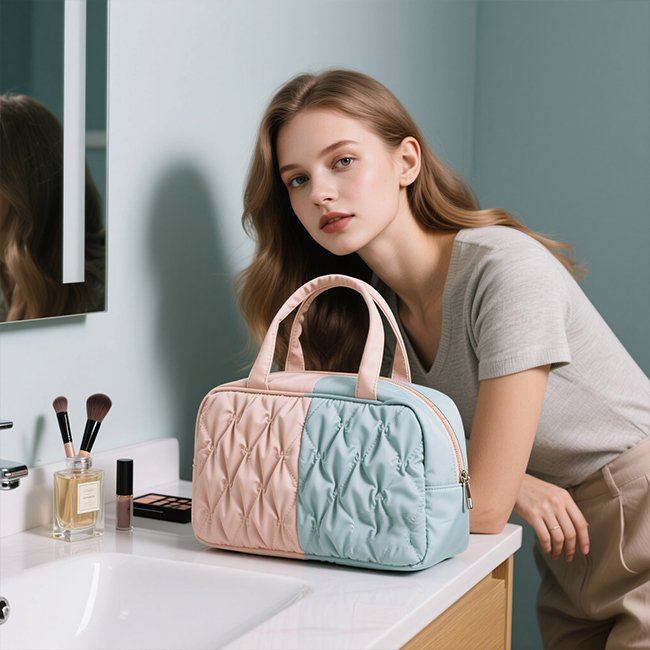
ISEN Bags makes toiletry bags for travel, daily storage, bathroom organizing, and general cosmetic use. The lineup covers portable pouches, cosmetic storage bags, hanging organizers, compact bags, and multi-compartment designs, so there's usually something that fits whatever a customer needs it for. Across all of them, the focus stays on getting th...VIEW MORE
-
-
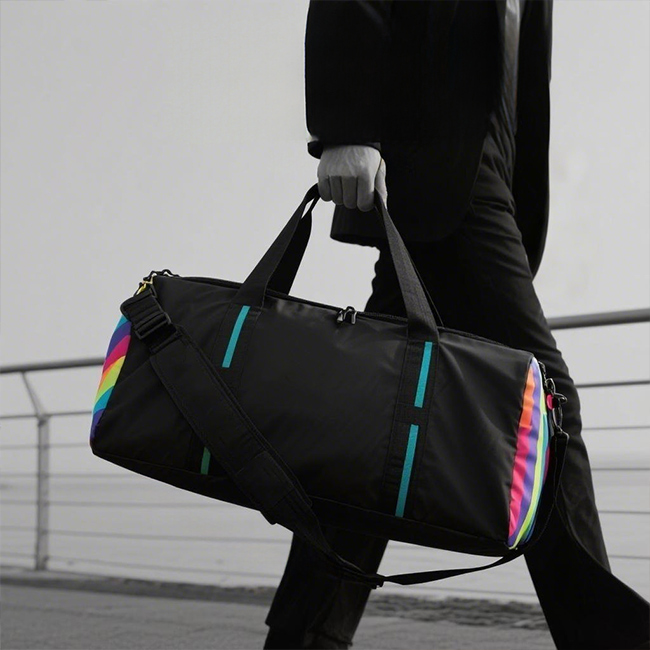
Travel bags are one of those things that just come in handy — whether it's a quick weekend trip, a business trip, heading outdoors, or just needing extra room to pack for a longer journey. This category covers quite a few styles, from duffle bags and foldable travel bags to carry-ons and larger capacity options, so there's usually something that fi...VIEW MORE
-
-
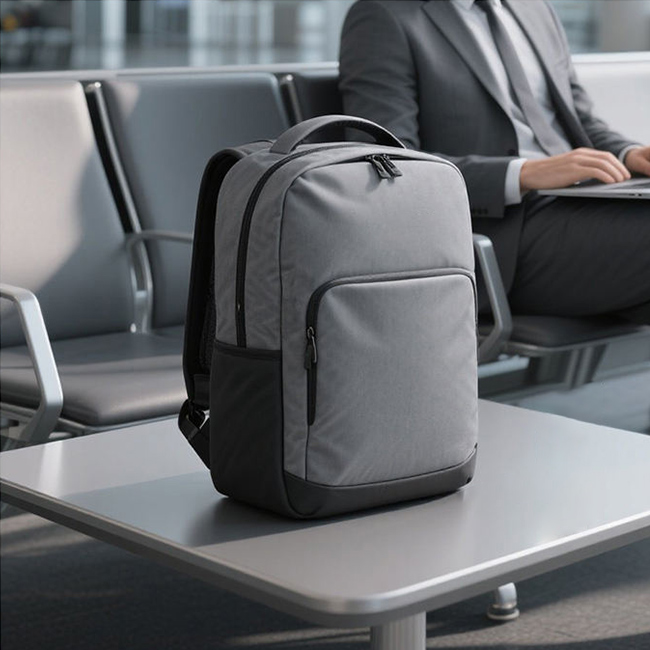
ISEN Bags works as a backpack factory and manufacturer, putting together OEM and ODM Backpack solutions for everyday use, business travel, school, outdoor activities, and commuting. Our backpack lineup brings together practical storage, comfortable ergonomics, and materials that hold up over time — and each one can be adjusted in fabric, size, colo...VIEW MORE
-
-
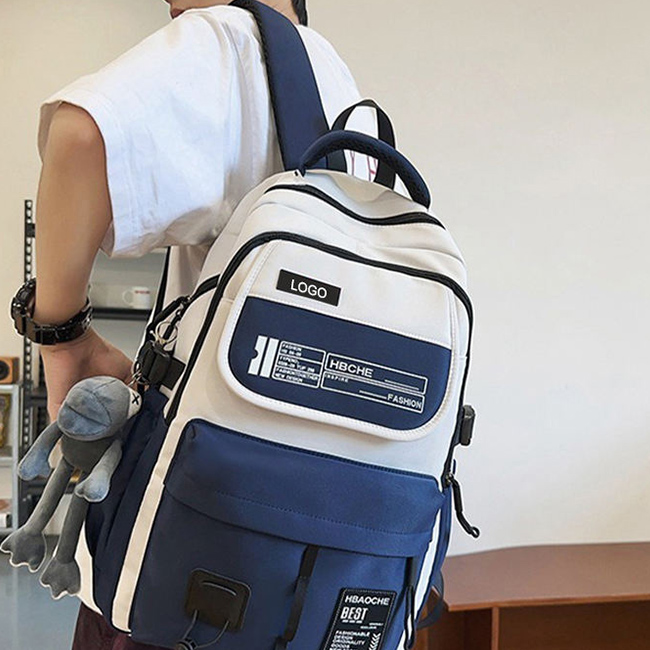
A good School Bag ends up being one of those everyday items students rely on without thinking twice about it — it just needs to work, day after day, through years of use. As a School Bag Manufacturer, Yisen Bags builds Custom School Backpacks for a wide range of age groups, school levels, and carrying habits. Each bag comes together with durable ma...VIEW MORE
-

-
Our cooler bag range covers the basics that actually matter — keeping temperature steady, giving enough storage room, and staying easy to use day to day. Working as a cooler bag manufacturer and supplier, we put together soft cooler bags, cooler backpacks, lunch cooler bags, and custom insulated bags that get used across a fair number of situations...VIEW MORE
-
-
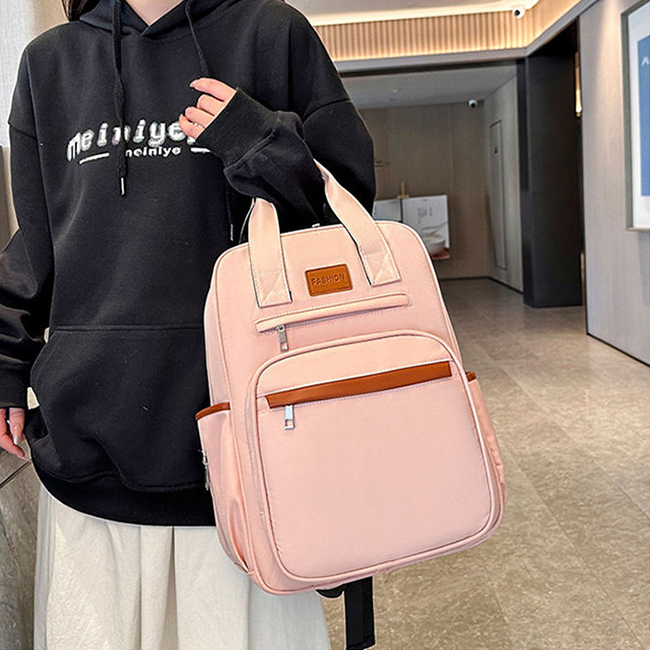
For most parents, a diaper bag ends up being one of those things they use constantly without really thinking about — but it needs to work well precisely because it gets used so often. It's meant to carry diapers, wipes, bottles, spare clothes, toys, snacks, and whatever personal items get thrown in along the way. A diaper backpack bag that's actual...VIEW MORE
-
-
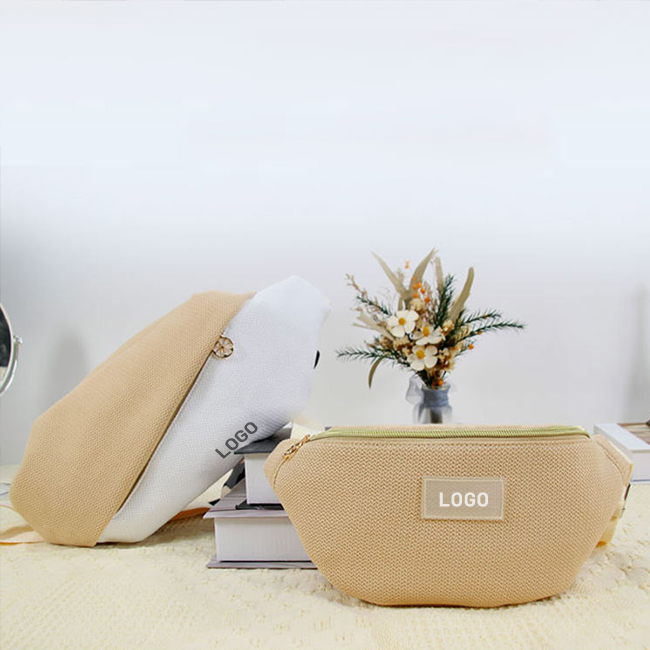
We make waist bags meant for practical, hands-free carrying — whether that's daily errands, travel, sports, or general outdoor use. As a waist bag manufacturer and supplier, our range covers a few different design directions, but they all aim for the same thing: something compact, comfortable to wear, and useful enough to actually reach for. Materi...VIEW MORE
-
-
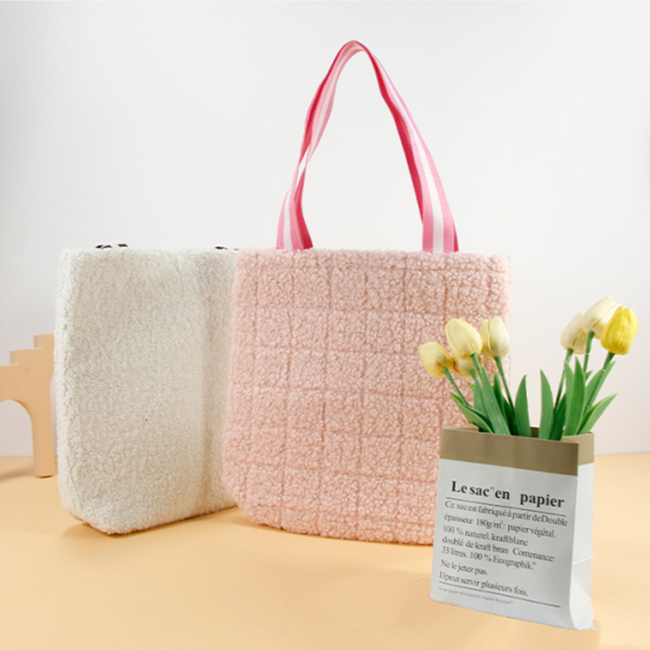
Shopping bags are one of those items that get used across a lot of different settings — retail, travel, promotional events, regular daily shopping, and general brand packaging. At Yisen Bag, we work as a shopping bag manufacturer producing a range of customizable options across different materials, styles, sizes, colors, and handle designs, dependi...VIEW MORE
-
-
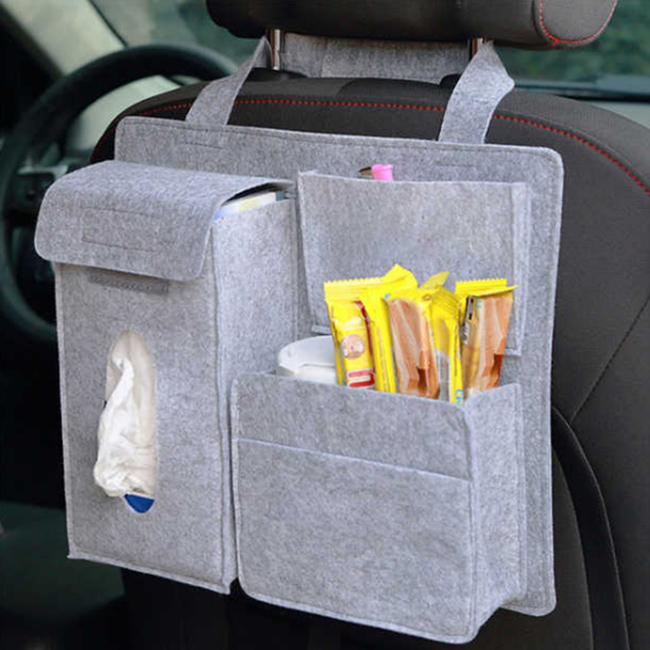
A car organizer is basically a storage solution for the parts of a car that usually end up messy — the seat back, the trunk, wherever loose items pile up. Depending on how it's set up, it might work as a universal car organizer, a seat back organizer, or something meant more for trunk storage. Either way, the idea's the same: give bottles, snacks, ...VIEW MORE
-
-
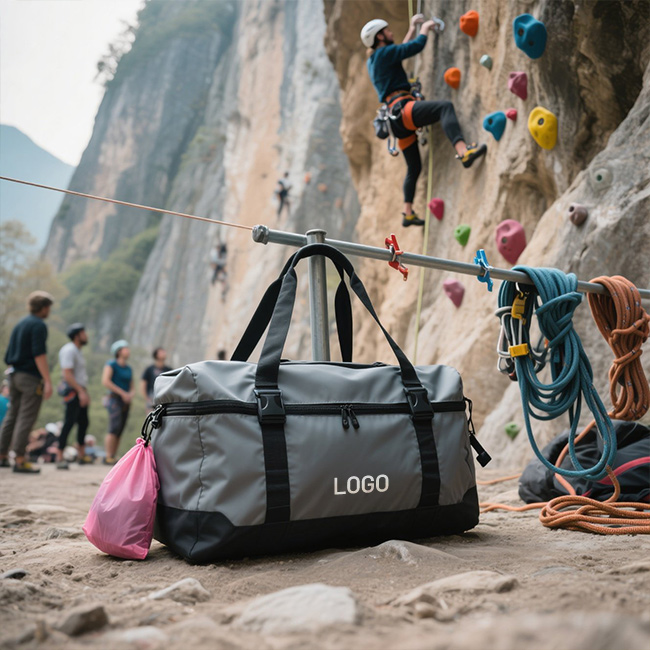
Yisen makes custom sports bags for gym training, outdoor use, team sports, travel, and everyday fitness routines. We're a sports bag manufacturer at the core, so our focus stays on things that actually matter in production — solid structure, materials that hold up, comfortable carrying, and enough flexibility to customize for whatever market a clie...VIEW MORE
-
-
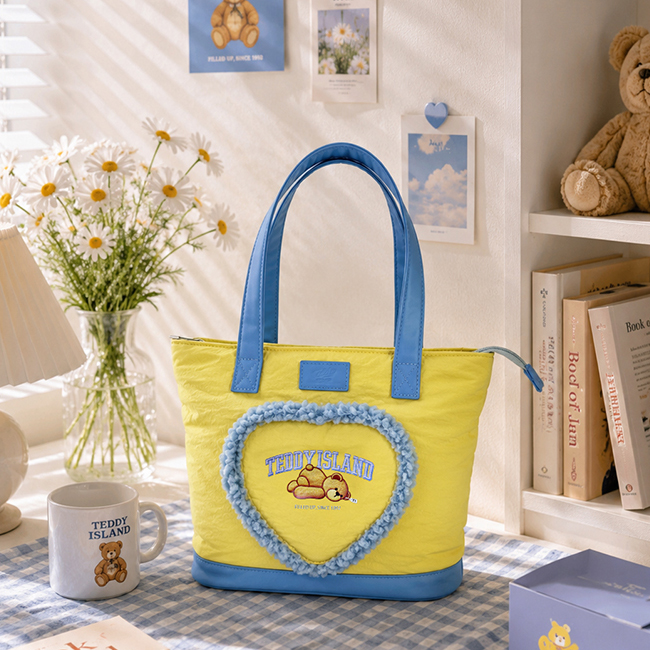
Tote bags are basically the go-to bag for getting things done — shopping, commuting, travel, school, work, running errands, whatever the day calls for. They're built simple: open top, one big main compartment, handles you can actually carry comfortably. That's it. No complicated zippers or compartments to fuss with, just grab your books, laptop, gr...VIEW MORE
About Us
Certificate
-
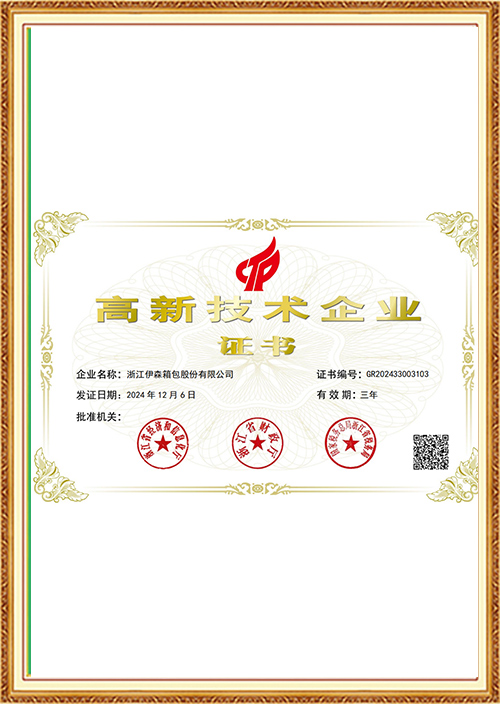 High-tech Enterprise Certificate
 -
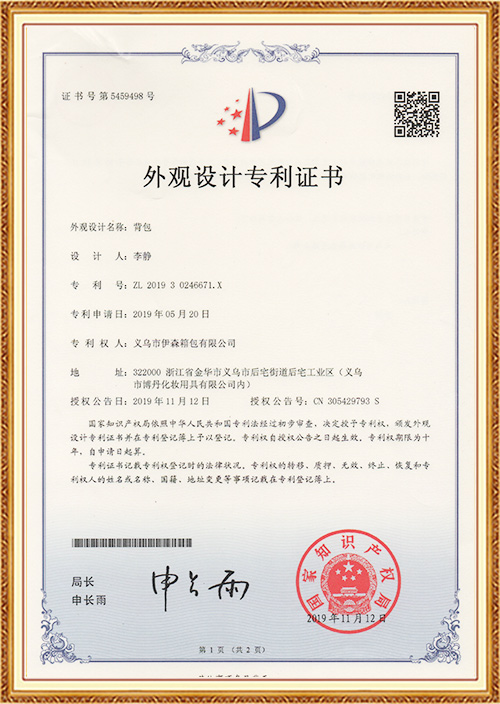 Appearance Patent Certificate
 -
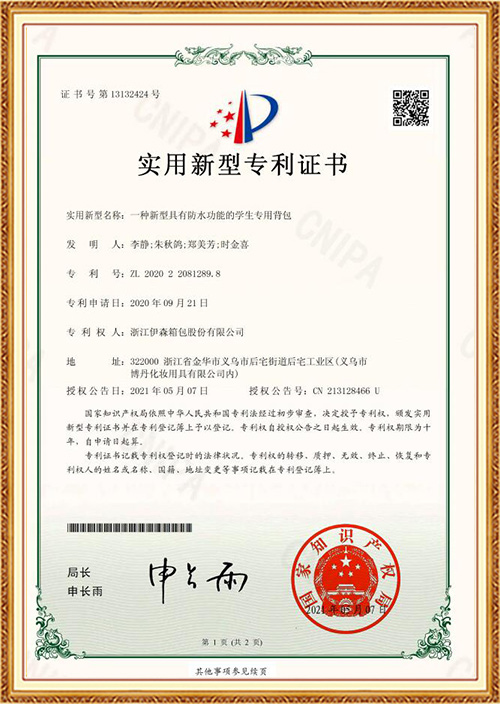 Utility Model Patent Certificate
 -
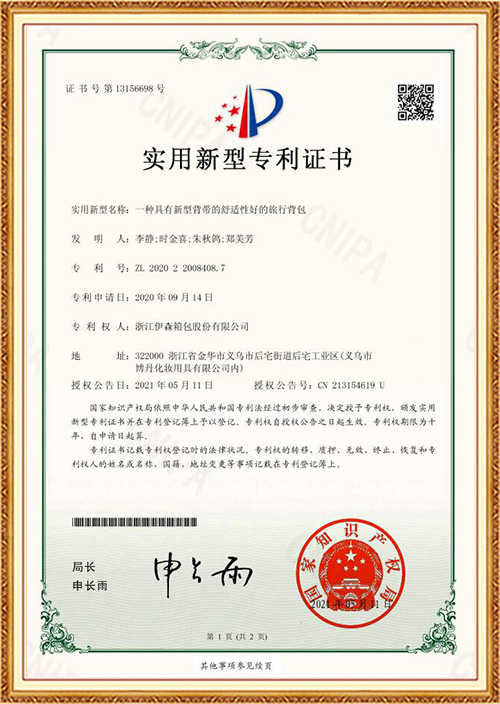 Utility Model Patent Certificate
 -
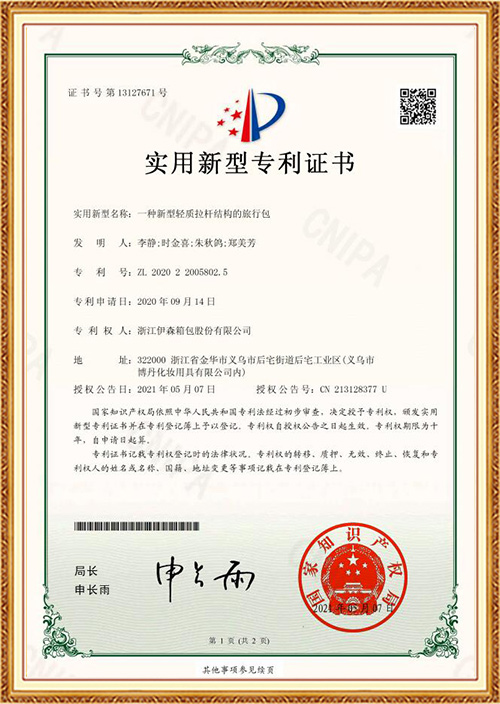 Utility Model Patent Certificate
News
-
Industry News 2026-09-25
Moisture has always been part of the environment around toiletry bags. A bag may...
View More -
Industry News 2026-09-18
Taking baby food and bottles outside involves more than finding room inside a ba...
View More -
Industry News 2026-09-11
Travel places personal care items into temporary bathrooms where space is limite...
View More -
Industry News 2026-09-04
A day hike usually means carrying food for several hours before eating it, somet...
View More -
Industry News 2026-08-28
A travel wash bag once needed little more than a roomy opening and enough space ...
View More
Industry Knowledge: How to Source and Customize Bags, Backpacks, and Tool Bags for Commercial Product Programs
The bag industry is broad — backpacks, tool bags, travel bags, cosmetic bags, tote bags, cooler bags, storage bags, sports bags, outdoor bags, promotional pouches, and more. These products look nothing alike on the surface, but the sourcing logic behind them is pretty much the same: whatever gets made has to fit the intended use, the sales channel, the price point, the material requirements, the branding, and the packaging.
For import companies, distributors, retail chains, Amazon and eCommerce sellers, promotional gift companies, travel accessory brands, and OEM/ODM buyers, choosing a bag isn't just about how it looks. A bag project actually succeeds or fails based on things like material durability, sewing quality, pocket layout, load capacity, zipper performance, how the logo gets applied, packaging, lead times, and whether production stays consistent batch after batch.
A bag that's actually useful solves a real storage or carrying problem. A backpack needs to be comfortable and distribute weight properly. A tool bag needs to hold heavy tools without falling apart. A cosmetic bag needs to keep small beauty items organized. A travel bag needs to balance how much it holds against how easy it is to carry. A promotional bag needs the logo to stand out while keeping costs reasonable.
What Is a Custom Bag?
A custom bag is exactly what it sounds like — a bag built to spec, based on whatever size, shape, material, color, structure, logo, hardware, and packaging a project calls for. It could be for daily commuting, travel, tools, cosmetics, outdoor use, retail display, a promo campaign, personal care storage, sports, or industrial work.
From a sourcing standpoint, this isn't a fixed, off-the-shelf item. It's more of a starting point — a base that gets shaped through design decisions and production choices along the way.
Common custom bag categories include:
- Backpacks
- Tool bags
- Travel bags
- Cosmetic bags
- Toiletry bags
- Tote bags
- Cooler bags
- Sports bags
- Drawstring bags
- Laptop bags
- Waist bags
- Outdoor storage bags
- Promotional pouches
- Industrial organizer bags
A custom bag is usually evaluated by:
- Product size and capacity
- Material strength and surface finish
- Pocket and compartment structure
- Zipper and puller quality
- Handle and strap reinforcement
- Lining and inner protection
- Stitching density and seam strength
- Logo application method
- Hardware and accessory selection
- Packaging format
- Production cost control
- Final market positioning
Different channels require different product priorities. Retail chains may care about appearance consistency and display packaging. eCommerce sellers often focus on product photos, clear dimensions, functional selling points, and review stability. Promotional gift companies usually care about logo visibility, cost control, and delivery planning. Tool bag programs require stronger fabric, reinforced stitching, and practical pocket layout. Travel accessory brands often need lightweight structure, durable zippers, and clean branding.
A professional factory helps connect these requirements into a practical product plan.
Common Types of Bags
Different bag types are built for different jobs, and picking the right one from the start makes samples more accurate, cuts down on revisions, and keeps development costs in check.
Custom Backpack
Backpacks are probably the most versatile bag type out there — school, work, travel, outdoor activities, laptop carrying, sports, promo campaigns, brand collections, all of it.
Where they show up most:
- School and student programs
- Laptop and office bags
- Travel accessory lines
- Outdoor and hiking gear
- Sports and gym bags
- Retail chain products
- eCommerce listings
- Promotional gifts
- Private-label development
Features that tend to matter:
- Main compartment
- Laptop sleeve
- Front zipper pocket
- Side bottle pockets
- Padded shoulder straps
- Breathable back panel
- Luggage strap
- USB port opening
- Anti-theft pocket
- Reinforced bottom
A backpack supplier worth choosing should understand pattern design, how the load gets distributed, strap comfort, padding thickness, fabric choice, and zipper strength. From the outside a backpack can look pretty basic, but comfort and how long it lasts really come down to what's happening on the inside.
Tool Bag
Tool bags carry hand tools, power tools, screws, hardware, measuring tools, repair kits, work equipment — heavier stuff, basically, which means they need tougher materials and a sturdier build than a regular bag.
Where they're used:
- Hardware stores
- Industrial supply
- Electrician kits
- Mechanic storage
- Construction gear
- Home repair kits
- Promotional tool sets
- Professional equipment storage
Typical features:
- Heavy-duty fabric
- Reinforced base
- Multiple tool pockets
- Webbing loops
- Metal hardware
- Wide opening
- Strong handle
- Shoulder strap
- Thick lining
- Bar-tack reinforcement
A tool bag manufacturer needs to pay close attention to load capacity, pocket stitching, base support, how well the fabric resists abrasion, and handle strength. Skimp on reinforcement and things tear — especially once metal tools are involved.
Travel Bag
Travel bags cover short trips, business travel, gym use, weekend packing, personal item storage — could be a duffel, a foldable travel bag, a carry-on, a garment bag, or a travel organizer.
Common uses:
- Travel accessory brands
- Retail luggage sections
- eCommerce travel products
- Hotel and resort programs
- Sports and gym collections
- Promotional travel gifts
Design features people look for:
- Large main compartment
- Shoe pocket
- Wet/dry separation
- Side zipper pocket
- Trolley sleeve
- Adjustable shoulder strap
- Foldable structure
- Water-resistant fabric
- Reinforced handle
The tricky part with travel bags is balancing capacity, weight, durability, and how easy they pack down. Go too heavy on the material and shipping costs and comfort take a hit. Go too light and it won't hold up on the road.
Cosmetic Bag
Cosmetic bags hold makeup, skincare, brushes, toiletries, grooming tools, small accessories — you'll find them across beauty, travel, gift, hotel, and eCommerce channels.
Common applications:
- Beauty accessory collections
- Makeup storage programs
- Travel toiletry sets
- Hotel amenity kits
- Gift packaging
- Promotional cosmetic pouches
- Private-label beauty products
Popular styles:
- Flat makeup pouch
- Box-shaped cosmetic bag
- Clear PVC bag
- PU makeup organizer
- Quilted pouch
- Hanging toiletry bag
- Makeup brush bag
- Multi-piece set
A cosmetic bag needs to be easy to clean, easy to open, visually appealing, and sized right for everyday beauty products. Logo placement, zipper color, lining material, and packaging all play a bigger role than people expect in how the product actually presents.
Tote Bag
Totes are simple, versatile, and usually made from canvas, cotton, non-woven fabric, polyester, recycled fabric, or laminated material.
Where they turn up:
- Retail shopping bags
- Promotional gifts
- Lifestyle brand products
- Grocery and reusable bags
- Event bags
- Eco-style product lines
- Gift packaging
Typical features:
- Open-top structure
- Zipper closure
- Inner pocket
- Long handles
- Bottom gusset
- Printed logo
- Woven label
- Recycled material option
Totes are easy to customize, which makes them a natural fit for logo-heavy projects. What matters most in production is fabric weight, handle stitching, and print quality.
Cooler Bag
Cooler bags keep food and drinks cold for a stretch of time — think lunch bags, picnic bags, grocery delivery, outdoor use, or promotional food packaging.
Common uses:
- Lunch bag programs
- Food delivery accessories
- Outdoor picnic products
- Supermarket reusable bags
- Promotional drink bags
- Travel food storage
Materials typically involved:
- Polyester outer fabric
- Oxford cloth
- Aluminum foil lining
- PEVA lining
- EPE foam
- Non-woven fabric
- Laminated material
Quality really comes down to insulation thickness, how well the lining is sealed, zipper strength, handle reinforcement, and how easy it is to clean.
Sports Bag
Sports bags cover gym, training, swimming, yoga, team sports, outdoor activities — could be a duffel, drawstring bag, shoe bag, wet bag, or fitness organizer.
Common applications:
- Sports brands
- Fitness product lines
- School team programs
- Gym promotional products
- Travel and active lifestyle collections
Features that come up a lot:
- Shoe compartment
- Wet pocket
- Mesh ventilation
- Adjustable strap
- Side handle
- Large main compartment
- Water-resistant fabric
Durability and smart organization matter here. Ventilation helps with shoes and damp clothing, and the zippers need to hold up to being opened and closed constantly.
Drawstring Bag
Drawstring bags are light, simple, and cheap to produce — a natural fit for events, sports, schools, promo campaigns, and basic storage.
Common applications:
- Event giveaways
- Sports activities
- School programs
- Promotional campaigns
- Travel laundry pouches
- Lightweight packaging
Materials used:
- Polyester
- Non-woven fabric
- Cotton
- Mesh
- Recycled fabric
Easy to print, quick to pack — the things worth checking are fabric thickness, how strong the drawstring is, corner reinforcement, and print clarity.
Outdoor Bag
Outdoor bags cover hiking backpacks, camping storage, waterproof pouches, tactical-style bags, and equipment organizers — all of which need stronger materials and more functional design than everyday bags.
Common uses:
- Outdoor brands
- Camping equipment lines
- Hiking and trekking products
- Fishing accessories
- Tactical storage programs
- Adventure travel collections
Features typically included:
- Water-resistant fabric
- Reinforced seams
- Multiple pockets
- Compression straps
- Buckles
- MOLLE webbing
- Padded straps
- Breathable back panel
Material choice and durability testing matter a lot here — abrasion resistance, water resistance, hardware strength, and how well the bag handles load are the main things to get right.
Materials Used in Bag Manufacturing
The material you pick shapes everything about a bag — cost, how long it lasts, what it looks like, how heavy it feels, how easy it is to clean, and which market it fits into. Getting this right means matching the fabric to both the final use and where the product sits price-wise.
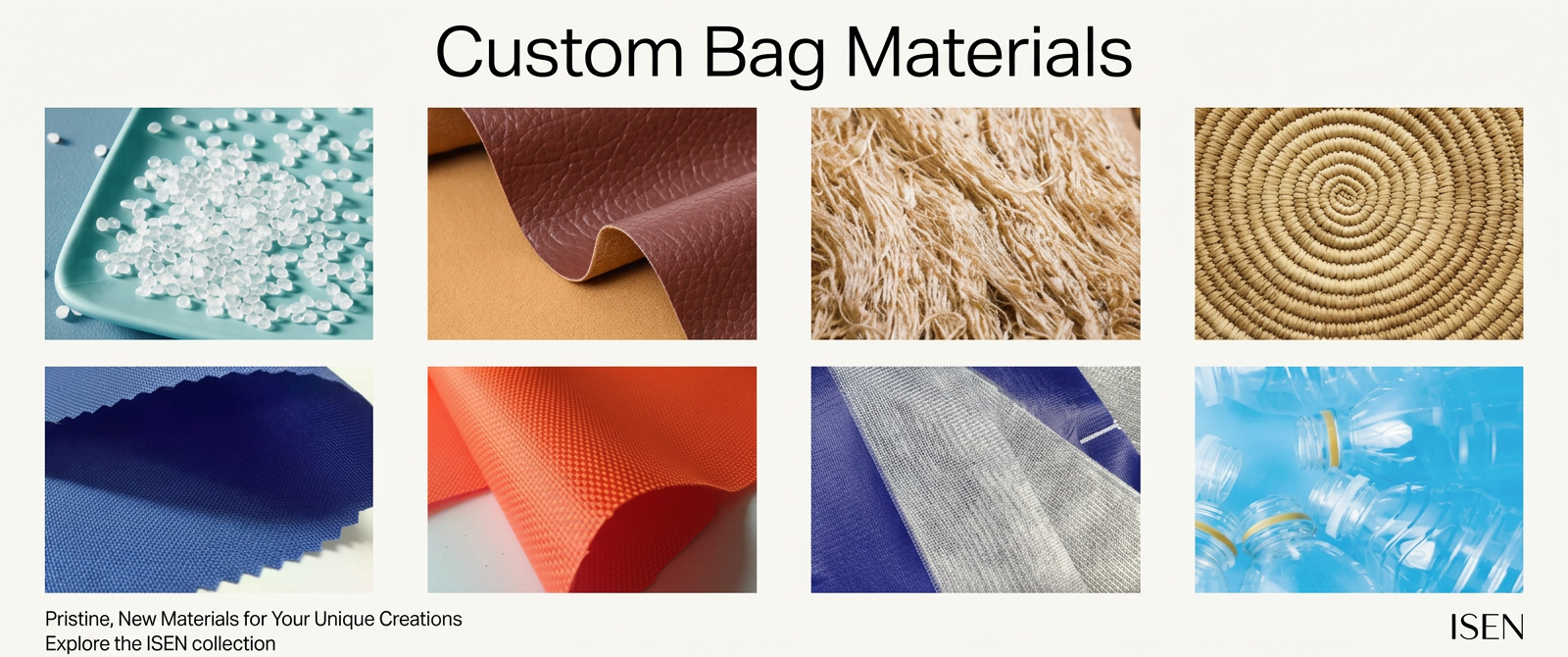
Polyester
Probably the most common fabric in bag making. It's light, flexible, cheap to produce, and comes in just about any color you'd want.
What it's good for:
- Keeping costs down
- Light weight
- Printing well
- Wide color range
- Fitting many different bag types
- Taking coatings and linings easily
You'll see it in backpacks, drawstring bags, cosmetic bags, travel bags, promotional items, and sports bags. It's a solid fit for budget and mid-range products, and it can be dressed up with PU coating, PVC backing, digital print, jacquard texture, or a custom lining if the project calls for it.
Oxford Cloth
This is the go-to for backpacks, tool bags, travel bags, cooler bags, and outdoor gear — tougher than plain polyester.
The denier ratings tell you roughly what you're getting:
- 300D — light and flexible
- 420D — a middle ground on strength and cost
- 600D — noticeably stronger, more durable
- 900D / 1200D — the heavy-duty end, for tool bags and rough use
It can also be coated for water resistance. For anything getting hard use — tool bags, outdoor products — going with a higher denier usually pays off.
Nylon
Strong, light, smooth to the touch. Shows up a lot in travel bags, outdoor gear, backpacks, sports bags, and lighter premium products.
What stands out:
- Great strength for how light it is
- Smooth surface
- Holds up well against abrasion
- Packs down compactly
- Feels premium
It costs more than polyester, but you get better durability and a cleaner finish, which matters for higher-end products.
Canvas
A natural-feeling fabric with real texture, and it holds up well over time. Common in tote bags, tool bags, casual backpacks, cosmetic pouches, and outdoor-style products.
Why people choose it:
- Solid fabric texture
- Looks natural, not synthetic
- Wears well
- Takes embroidery nicely
- Pairs well with PU or leather-look trim
If water resistance matters, it'll need a coating or lining added. It's a favorite for lifestyle-branded and eco-leaning product lines.
PU Leather
Gives you a leather look without actual leather. Common in fashion backpacks, cosmetic bags, laptop bags, travel pouches, and gift items.
What it offers:
- Smooth finish
- Wipes clean easily
- Takes embossed logos well
- Holds structure
- Pairs nicely with metal hardware
It fits well into more refined product lines. Things worth checking: how thick the surface layer is, how strong the backing is, whether the color holds up over time, and whether it's prone to peeling.
PVC
The material behind clear bags, waterproof-style pouches, cosmetic bags, and some promo items.
Its strengths:
- Comes clear or in color
- Resists water
- Easy to wipe down
- Handles liquids fine
- Good visibility through the material
Thickness and softness need to be chosen with care, and odor is something to keep an eye on — especially for anything touching cosmetics, food accessories, or personal care items.
TPU
A step up from PVC — clear or waterproof-style, but softer and more flexible.
What makes it stand out:
- Soft feel
- Stays clear
- More flexible than PVC
- Holds up longer
- Suits premium clear bags
Usually the pick for clear cosmetic bags, waterproof pouches, outdoor accessories, and higher-end travel storage.
Non-Woven Fabric
The standard for simple tote bags, gift bags, shopping bags, and promo packaging.
Why it gets used:
- Cheap
- Light
- Prints well
- Fine for simple shapes
- Comes in plenty of colors
It's not as tough as woven fabric, so it makes more sense for light, one-time or occasional use rather than daily wear.
Mesh
Usually shows up in pockets, sports bags, beach bags, laundry bags, and anywhere ventilation matters.
What it brings:
- Very light
- Breathes well
- Dries fast
- Lets you see what's inside
- Helps with airflow
Worth checking tear strength, how stretchy it is, and whether the edges hold up over time.
Recycled Fabric
Recycled polyester and similar materials are becoming more common, especially for product lines built around sustainability.
What it offers:
- Backs up an eco-focused product story
- Comes in several fabric variations
- Works for backpacks, totes, pouches, travel bags
- Pairs naturally with eco-friendly packaging
Before moving to production, it's worth checking certification, actual recycled content, color consistency, and any labeling requirements that apply.
OEM and ODM Customization Options
OEM and ODM customization allows bags to match different product functions, brand styles, market levels, and packaging needs. The following table summarizes common customization choices.
| Customization Item | Options | Notes for Sourcing Teams |
|---|---|---|
| Size | Small pouch, medium backpack, large travel bag, custom dimensions | Confirm capacity with real products or sample contents |
| Shape | Backpack, tote, duffel, tool bag, pouch, cooler bag, organizer, drawstring bag | Shape affects sewing process, material usage, and packing volume |
| Material | Polyester, Oxford cloth, nylon, canvas, PU, PVC, TPU, mesh, non-woven, recycled fabric | Select material based on durability, appearance, cost, and market level |
| Color / Pantone Color | Standard colors, seasonal colors, two-tone design, printed pattern, Pantone matching | Custom color matching may need additional preparation time |
| Logo Method | Screen printing, embroidery, woven label, rubber patch, heat transfer, embossed logo | Logo method should match fabric surface and product style |
| Compartments | Main pocket, laptop sleeve, tool pockets, mesh pockets, wet pocket, shoe pocket | Pocket layout should match real use instead of only visual design |
| Zippers and Pullers | Nylon zipper, metal zipper, waterproof zipper, double zipper, custom puller | Zipper quality affects durability and daily experience |
| Handles and Straps | Webbing handle, padded handle, PU handle, adjustable strap, shoulder strap | Reinforcement is important for heavy-duty and travel products |
| Lining | Polyester, PEVA, PVC, TPU, foam padding, insulated lining, wipeable lining | Lining selection depends on product function |
| Hardware | Buckles, D-rings, hooks, metal accessories, plastic accessories | Hardware strength should match expected load |
| Packaging | OPP bag, hang tag, color box, paper card, eco-friendly packaging | Packaging should match retail display, eCommerce shipping, or gift presentation |
| Product Sets | Bag set, travel set, cosmetic set, tool kit set, organizer set | Sets help create a complete product solution |
A strong factory should support material sourcing, pattern development, sample making, logo testing, accessory matching, packaging planning, and inspection. For new development, it is useful to confirm target price, application, size, material, logo method, and packaging style before sampling.
Why Choose ISEN Bags Manufacturer
Picking the right factory can make the whole development process smoother, more predictable, and easier on the budget. ISEN Bags works across a range of bag categories, taking whatever a client starts with — a concept, a reference sample, a rough sketch, or just an idea from the market — and turning it into a finished product.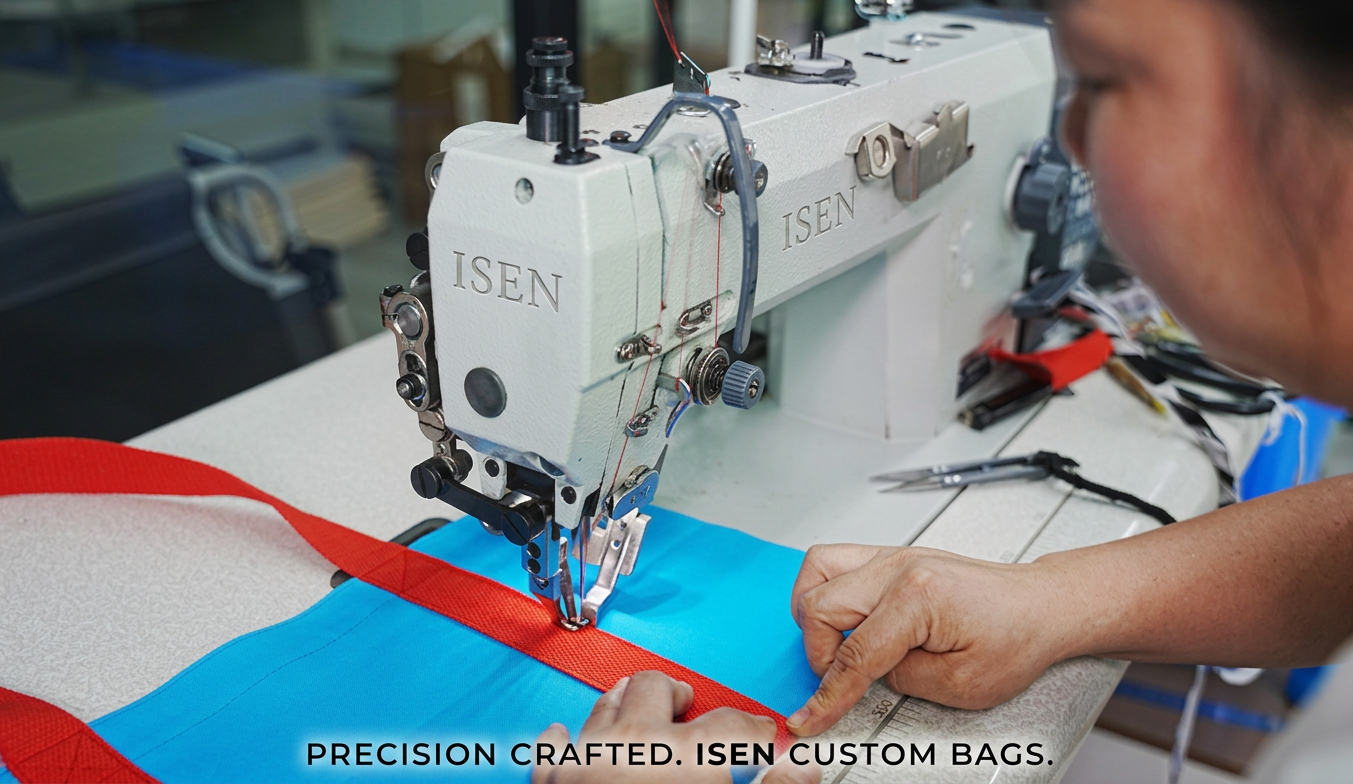
A Broad Product Range
ISEN Bags produces quite a few different types, including:
- Custom backpacks
- Tool bags
- Travel bags
- Cosmetic bags
- Tote bags
- Cooler bags
- Sports bags
- Outdoor bags
- Drawstring bags
- Storage bags
- Promotional bags
Because the range is this wide, clients can put together matching collections — backpack and travel pouch sets, a full tool bag series, cosmetic bag sets, or a promotional bag lineup.
OEM and ODM Support
Our team handles both OEM and ODM work, starting from whatever's already available — existing specs, reference photos, a physical sample, or a fresh design idea.
That support covers:
- Pattern development
- Material recommendations
- Sample making
- Logo method testing
- Structure adjustments
- Zipper and hardware matching
- Packaging suggestions
- Cost optimization
The point of all this is cutting down on the back-and-forth trial and error that usually eats up time during development.
Picking the Right Materials
Different markets call for different materials, and ISEN Bags helps match them based on function, price point, appearance, and how durable the bag needs to be.
Common options include:
- Polyester
- Oxford cloth
- Nylon
- Canvas
- PU
- PVC
- TPU
- Mesh
- Non-woven fabric
- Recycled fabric
A heavy-duty tool bag, for instance, probably needs 600D or 900D Oxford cloth with reinforced stitching, while a cosmetic bag might do better in PU, PVC, quilted fabric, or polyester with a wipeable lining.
Sewing and Workmanship That Holds Up
A lot of what determines bag quality comes down to sewing detail. We pay attention to stitching alignment, reinforcing stress points, how the zipper is installed, handle strength, pocket construction, and edge finishing.
Details worth getting right:
- Straight stitching
- Reinforced handles
- Clean binding
- Smooth zipper action
- Proper lining fit
- Strong pocket seams
- Accurate logo placement
- Consistent shape across units
These are the small things that end up shaping how reliable — and how good — the finished bag actually looks and feels.
Logo and Packaging Flexibility
Brand presentation matters for retail, eCommerce, gifting, and private-label work, so ISEN Bags offers a range of logo and packaging choices.
Logo methods:
- Screen printing
- Embroidery
- Woven label
- Rubber patch
- Heat transfer
- Embossed logo
- Metal plate
- Custom zipper puller
Packaging options:
- OPP bag
- Hang tag
- Paper card
- Color box
- Kraft packaging
- Gift packaging
- Eco-friendly packaging
Having these choices makes it easier to fit whatever channel the product is heading into.
Quality Checks Throughout Production
We run practical inspection steps at each stage of production rather than just checking at the end.
Points we look at:
- Fabric and accessory checks
- Cutting accuracy
- Logo position
- Sewing quality
- Zipper and hardware function
- Finished product appearance
- Packing method
Quality control works better when it's built into the process from the start — not something tacked on right before shipping.
Experience Across Global Markets
ISEN Bags has worked with retail chains, import companies, distributors, eCommerce sellers, promotional gift companies, travel accessory brands, and private-label teams. What we bring to those projects is straightforward communication, real sample support, and development suggestions grounded in actual manufacturing experience.
FAQ
What types of bags can be customized by a bag factory?
A bag factory can customize backpacks, tool bags, travel bags, cosmetic bags, cooler bags, tote bags, sports bags, drawstring bags, laptop bags, outdoor bags, storage bags, and promotional pouches.
What materials are commonly used for custom backpacks?
Common backpack materials include polyester, Oxford cloth, nylon, canvas, PU, mesh, and recycled fabric. Oxford cloth and polyester are widely used for regular backpacks, while nylon and recycled fabric are often selected for higher-value programs.
What fabric is suitable for tool bags?
Tool bags usually require durable materials such as 600D Oxford, 900D Oxford, 1200D Oxford, canvas, or reinforced polyester. Strong stitching, reinforced bottom panels, and heavy-duty handles are also important.
Can bags be customized with company logos?
Yes. Logo methods include screen printing, embroidery, woven label, rubber patch, heat transfer, embossed logo, debossed logo, PU patch, metal plate, and custom zipper puller. The best method depends on material and product style.
What information is needed for a custom bag quotation?
Useful information includes bag type, size, material, color, logo method, pocket structure, zipper type, packaging style, target price range, and reference images or drawings.
Can a factory develop a bag from a reference photo?
Yes. A factory can usually develop a sample based on reference photos, sketches, size requirements, material preferences, and functional notes. A physical sample or technical drawing can make development more accurate.
What is the difference between polyester and Oxford cloth?
Polyester is lightweight and cost-efficient. Oxford cloth is usually stronger and more structured, making it suitable for backpacks, tool bags, travel bags, and outdoor products that need better durability.
Are custom bags water-resistant?
Many bags can be made water-resistant by using PU-coated fabric, PVC backing, TPU material, laminated fabric, or waterproof lining. Full waterproof performance requires special sealing and waterproof zipper construction.
What packaging options are available for custom bags?
Packaging options include OPP bag, hang tag, paper card, color box, kraft paper packaging, gift box, and eco-friendly packaging. Packaging should match retail display, online shipping, or gift presentation.
How should a custom bag sample be checked?
A sample should be checked for size, capacity, material quality, zipper smoothness, stitching, handle strength, pocket layout, logo position, lining fit, color accuracy, and packaging appearance.
Can bags be made as product sets?
Yes. Product sets can include travel bag sets, cosmetic bag sets, tool kit bags, organizer sets, pouch sets, or backpack accessory sets. Sets are useful for gift programs, travel collections, and private-label product lines.
How can a manufacturer support custom bag development?
A manufacturer can support material selection, pattern making, sample development, logo testing, accessory matching, structural adjustment, packaging planning, production management, and quality inspection.
Contact Us for Custom Bag Manufacturing
A bag that actually works comes down to a few things lining up together — the right material, a structure that's practical to use, sewing that holds up, a zipper that doesn't stick, branding that looks intentional, and packaging that fits the product. Whether the project is custom backpacks, tool bags, travel bags, cosmetic bags, tote bags, cooler bags, outdoor bags, or promotional pouches, having a factory that knows what it's doing makes the whole process go faster.
If there's a bag project in the works, get in touch and walk through what's needed — bag type, size, material, logo method, pocket layout, packaging, and target price. From there we can put together samples, work out a quote, and go over OEM or ODM options that fit the project.


Copyright © Zhejiang Yisen Bags Co., Ltd. All Rights Reserved.
Wholesale Bag Products
