

 English
  中文简体
中文简体  Français
  Español
  italiano



Outdoor Backpack
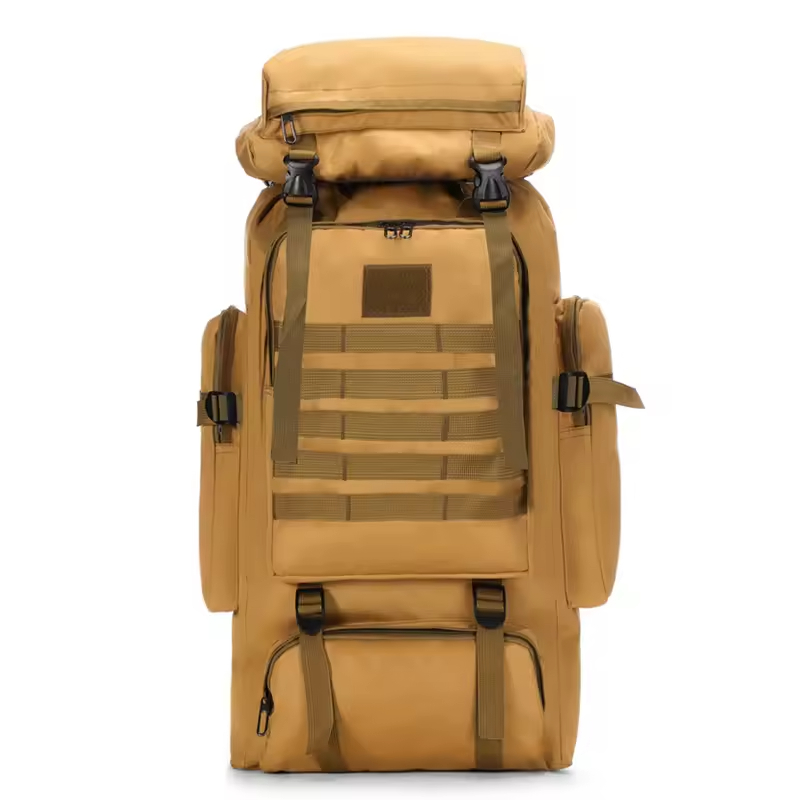
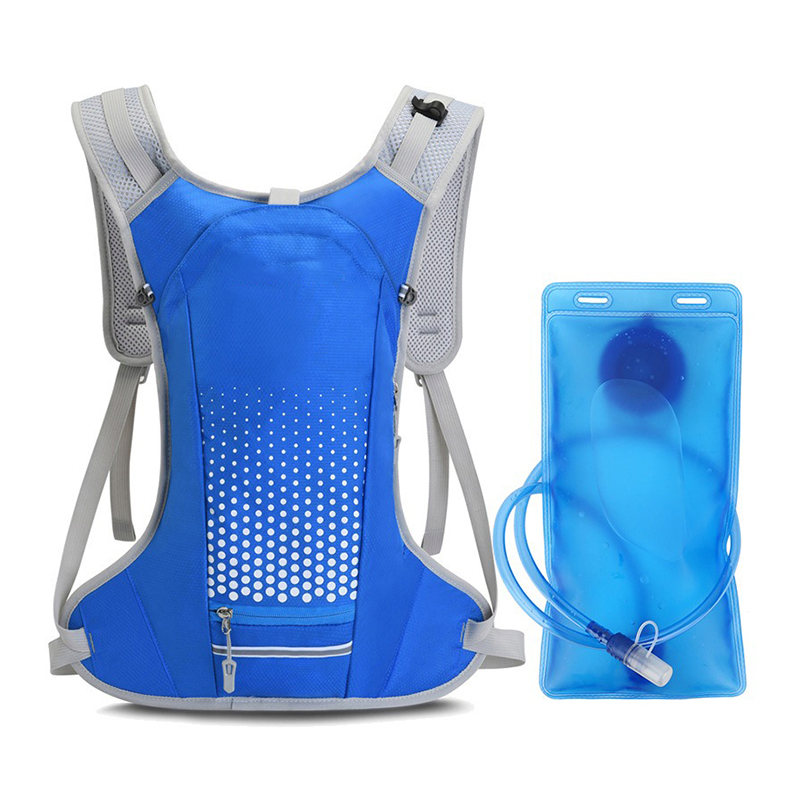
Our Outdoor Backpack collection covers hiking, camping, trekking, travel, and a good range of other outdoor sports activities. ISEN Bags works as an outdoor backpack manufacturer with a fairly straightforward focus — durable materials, ergonomic structure, functional storage, and weather resistance that actually holds up once a bag leaves the factory. Depending on the project, an outdoor sports backpack can come with padded shoulder straps, breathable back panels, adjustable waist belts, hydration compatibility, multiple compartments, waterproof coatings, and reinforced stitching built in.
OEM and ODM customization is where a lot of the flexibility comes from — different capacity options, fabric choices, color designs, logo applications, and functional upgrades, all shaped around what a particular market actually needs rather than a fixed template. Whether the bag ends up on a day trip, a long-distance hike, a mountain trail, or an outdoor training session, the goal stays the same: comfort, strength, and practical organization working together instead of one getting sacrificed for another. ISEN Bags provides the production support behind that — consistent quality paired with the kind of customization that lets brands build an Outdoor Backpack line that actually fits what they're going for.
About Us
Zhejiang Yisen Bags Co., Ltd. was established in 2010, and is a national high-tech enterprise and a technology and medium-sized enterprise in Zhejiang Province. It has maintained long-term technology development cooperation with the Yiwu Research Institute of Zhejiang University of Technology, and has been rated as a national Class A taxpayer for many years. The headquarters is located in a small commodity distribution center, which is the largest one in the world-Yiwu City.
ISEN as professional custom Outdoor Sports Backpack and OEM/ODM Outdoor Backpack Manufacturer, specializing in the production and sales of various types of bags, outdoor products, pet products and other bags, it has an industrial park of more than 30,000 square meters; has a R&D, design, sales and production team of more than 500 people, and has several inventions and technical practical patents; It has global certifications such as GRS, BScI, ISO9001:2015, etc.
Certificate
-
 High-tech Enterprise Certificate
 -
 Appearance Patent Certificate
 -
 Utility Model Patent Certificate
 -
 Utility Model Patent Certificate
News
-
Industry News 2026-09-18
Taking baby food and bottles outside involves more than finding room inside a ba...
View More -
Industry News 2026-09-11
Travel places personal care items into temporary bathrooms where space is limite...
View More -
Industry News 2026-09-04
A day hike usually means carrying food for several hours before eating it, somet...
View More -
Industry News 2026-08-28
A travel wash bag once needed little more than a roomy opening and enough space ...
View More
Industry Knowledge: Key Factors in Choosing an Outdoor Backpack
An Outdoor Backpack has to hold up in conditions that shift a lot — a short afternoon hike is one thing, but a multi-day camping trip asks a lot more of the same bag. That's really the difference between an ordinary daily backpack and something built for outdoor sports use: durability, comfort, how well it stores gear, and how it holds up against weather all have to work together. When a backpack is put together well, it lets people carry what they need across hiking, trekking, camping, climbing, cycling, or travel without the bag becoming the problem itself.
For companies building out an outdoor backpack line, looks are only part of the story. Material choice, how strong the stitching actually is, whether the straps support the body properly, how the compartments are laid out, and what customization options are on the table — all of that shapes the final product, how it feels to use day after day, and whether it holds up in the market over time. It's these details, more than the outer design, that separate a backpack people keep using from one that ends up sitting in a closet.
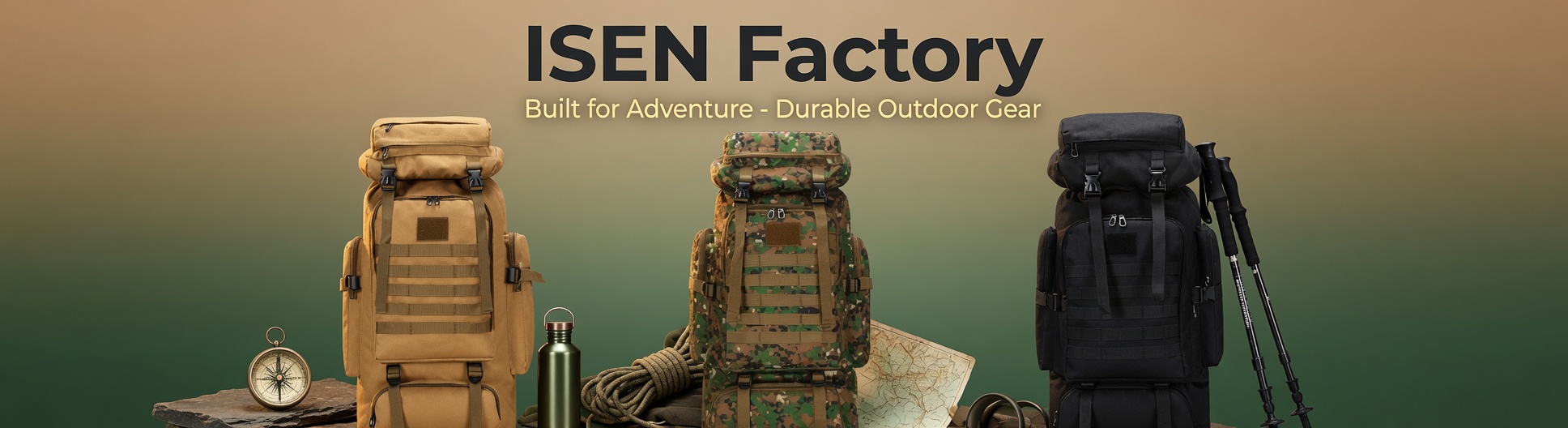
Material Selection and Durability
Material choice sits near the top of the list when it comes to making an Outdoor Backpack that actually lasts. Rain, dust, sun exposure, rocks, branches, constant rubbing against surfaces — outdoor conditions throw a lot at a bag, and the fabric needs enough backbone to handle daily wear on top of that.
A few fabrics show up again and again in outdoor sports backpacks for good reason:
- Polyester fabric — holds color well, resists abrasion decently, and keeps costs reasonable, which is why it turns up so often in hiking, travel, and general-purpose outdoor backpacks
- Nylon fabric — pulls ahead on tensile strength while staying lighter, a combination that fits performance-oriented outdoor backpacks well
- Ripstop fabric — the reinforced grid pattern woven into it does a real job of stopping small tears before they spread, useful in rougher conditions
- Oxford fabric — thicker and sturdier, often chosen for backpacks that need a more structured, solid shape
Beyond the base fabric itself, coating matters just as much. PU coating, PVC coating, or a water-repellent finish all help keep moisture out and protect whatever's packed inside. Reinforced bottom panels are another common addition for outdoor use — anyone who's set a backpack down on rocky or wet ground knows that's usually where wear shows up first.
Water Resistance and Weather Protection
Weather is one of those things that can make or break an Outdoor Backpack experience. Hiking, camping, trekking — sudden rain, wet grass, snow, muddy trails, all of it shows up eventually. A backpack worth its price should keep whatever's inside dry through the kind of weather people actually run into outdoors, not just in ideal conditions.
A few design features tend to make the real difference here:
- Water-repellent fabric coating
- Water-resistant zippers
- Rain cover design
- Sealed or reinforced seams
- Flap covers over zipper openings
- Waterproof bottom panels
Worth pointing out — water-resistant and fully waterproof aren't the same thing, and mixing them up leads to disappointment fast. Most outdoor sports backpacks fall into the water-resistant category, meaning they'll handle light rain or the occasional splash just fine. For harsher conditions, that's where extra features come in — waterproof compartments, roll-top closures, or a rain cover built right into the design.
Ergonomic Carrying System
Comfort is one of the things people notice fastest when carrying an Outdoor Backpack over any real distance. Once weight isn't distributed right, shoulder pressure builds up, backs start to fatigue, and moving naturally gets harder than it should be. That's exactly why the carrying system needs real ergonomic thinking behind it, not just padding stitched on as an afterthought.
A backpack that's actually built for outdoor use tends to include a similar set of features:
- Padded shoulder straps that take the direct pressure off the shoulders
- Adjustable chest straps to keep the bag stable while moving
- Waist belts or hip belts that shift some of the load from shoulders down to the hips
- Breathable back panels that let air move and cut down on heat buildup
- Foam padding that adds comfort without losing shape
- Adjustable strap systems that work across different body types
Weight distribution matters even more once you're talking about medium or large-capacity outdoor sports backpacks. A back support structure that's genuinely well designed can make a loaded bag feel noticeably lighter and steadier on the body — something that becomes obvious pretty quickly during climbing, trekking, or long stretches of walking, where a few bad design choices in the strap system can turn an otherwise good trip uncomfortable fast.
Capacity Planning and Functional Storage
Different outdoor activities require different backpack capacities. A compact outdoor backpack may be suitable for short day trips, while larger backpacks are needed for camping, trekking, or multi-day travel. Capacity planning should match the intended usage scenario.
Common outdoor backpack capacity ranges include:
| Capacity Range | Suitable Use | Common Features |
|---|---|---|
| 10L–20L | Short hiking, cycling, daily outdoor use | Lightweight body, water bottle pockets, simple compartments |
| 20L–35L | Day hiking, travel, sports activities | Multiple pockets, breathable back panel, hydration compatibility |
| 35L–50L | Weekend camping, trekking, outdoor training | Larger main compartment, waist support, gear attachment points |
| 50L+ | Long-distance trekking, multi-day camping | Strong frame support, expanded storage, reinforced load-bearing design |
Storage layout is just as important as capacity. A practical outdoor sports backpack should allow users to separate clothes, food, tools, water bottles, and small accessories. Side pockets, front zipper pockets, internal mesh pockets, hydration bladder compartments, and external attachment loops can greatly improve usability.
For outdoor activities, easy access matters. Users often need to reach a water bottle, phone, map, flashlight, gloves, or rain cover quickly without fully unpacking the bag.
Hardware, Zippers, Buckles, and Accessories
Small components end up mattering more than most people expect when it comes to how an Outdoor Backpack actually performs. Zippers, buckles, webbing, pullers, adjustment parts — these get used constantly during outdoor activities, so they need to hold up and stay easy to operate even after months of rough handling.
A few accessory details tend to separate a backpack that lasts from one that doesn't:
- Zippers that stay smooth through repeated opening and closing
- Buckles durable enough to resist cracking under pressure
- High-strength webbing running through shoulder straps, compression straps, and waist belts
- Reflective strips that help with visibility once light starts fading
- Elastic cords or daisy chains for clipping on extra gear
- Side compression straps that keep the load from shifting around
- Hydration tube openings built in for hiking or cycling use
For anyone involved in outdoor sports backpack manufacturing, these small parts shape more than just product quality — they shape whether users trust the bag at all. A backpack can have great fabric on paper, but if the buckles crack or the zipper jams halfway up a trail, that's the part people remember. Strong material alone doesn't carry a backpack through real outdoor conditions; it's the sum of every small part working together that does.
Structural Design and Load-Bearing Performance
An Outdoor Backpack usually ends up carrying more weight than a regular daily bag — clothing, water, food, tents, tools, electronics, sometimes all at once. That extra load means structural reinforcement isn't optional, it's basically part of the job description.
A few spots take most of the stress and need extra attention:
- Shoulder strap connection points
- Handle stitching
- Bottom panel
- Side pocket seams
- Zipper ends
- Waist belt attachment areas
- Gear loop positions
Bar-tack stitching and reinforced seams show up at these stress points for a reason — they're the areas that give out first if corners get cut during construction. Once you get into larger backpacks, it's common to see internal frames, PE boards, aluminum supports, or thicker foam panels added in, all working to keep the bag stable and comfortable to carry even when it's fully loaded.
Get the structure right, and an outdoor sports backpack holds its shape, keeps contents protected, and takes the kind of repeated use outdoor activities tend to throw at it — trail after trail, trip after trip, without the seams or straps giving up first.
Customization Options for Outdoor Backpack Development
Brand positioning, target market, use case — all of these push an Outdoor Backpack toward a customized design rather than a one-size-fits-all approach. That customization touches both how the bag looks and how it actually functions.
Some of the most common areas open to customization:
- Fabric type and thickness
- Color combinations
- Logo printing, embroidery, woven labels, or rubber patches
- Capacity and size adjustment
- Pocket layout design
- Zipper and buckle selection
- Waterproof coating or rain cover
- Reflective details
- Hydration system compatibility
- Laptop or equipment compartments
- Compression strap layout
- Packaging design
For an outdoor sports backpack project, getting a sample made early on is worth the time it takes. It's really the only way to confirm size, structure, comfort, fabric texture, and functional details before committing to mass production. Small tweaks that seem minor on paper — strap length, pocket depth, which way a zipper opens, where an accessory sits — often turn out to be the difference between a backpack that feels right in daily use and one that just looks fine in photos.
Outdoor Backpack Applications
An Outdoor Backpack shows up in more scenarios than people usually realize, and each one asks for something a little different in terms of design, materials, and features.
- Hiking: lightweight structure, breathable back panel, hydration compatibility
- Camping: larger capacity, reinforced bottom, external gear attachment
- Trekking: strong carrying system, waist support, multi-compartment storage
- Cycling: compact shape, reflective details, hydration tube design
- Climbing: streamlined profile, compression straps, durable fabric
- Travel: organized storage, comfortable straps, weather-resistant fabric
- Outdoor training: stable structure, durable accessories, easy-access pockets
Matching the design to the activity it's actually meant for tends to pay off in ways that show up over time — better comfort, easier day-to-day use, and a bag that holds its value instead of wearing out fast.
Trends in Outdoor Backpack Design
Design expectations keep shifting, and outdoor backpack design has moved right along with them. It's not just about durability anymore — people want something lightweight, comfortable, well-organized, and decent to look at, all at the same time.
A few trends worth watching right now:
- Lightweight materials that ease the load
- Minimalist look paired with genuinely practical storage
- Eco-friendly fabrics, like recycled polyester or GRS-certified materials
- Multi-functional compartments that work for both outdoor and travel use
- Modular attachment systems that add flexibility for carrying gear
- Better ventilation systems for comfort on longer trips
- Weather-resistant construction built for all-season use
- Gender-neutral, multi-size designs aimed at a broader market
Sustainability keeps gaining ground too. Recycled fabrics, sourcing materials more responsibly, building things to actually last — all of this stretches product life and cuts down on waste, which matters more to buyers now than it used to.
An outdoor sports backpack really comes down to getting several things right at once — strength, comfort, storage, and weather resistance, none of which can carry the whole product on its own. Fabric choice, ergonomic design, waterproofing, quality inspection — every one of these steps leaves its mark on how the bag performs once it's actually out on a trail or a trip. Staying focused on practical function, solid construction, flexible customization, and steady manufacturing quality is what lets an Outdoor Backpack hold up across hiking, camping, trekking, travel, and whatever else outdoor life throws at it.



Copyright © Zhejiang Yisen Bags Co., Ltd. All Rights
Reserved
Lightweight Outdoor Backpack OEM Supply Factory
