

 English
  中文简体
中文简体  Français
  Español
  italiano

Why Do Toiletry Storage Bag Have so Many Small Pockets


Why Do Toiletry Storage Bag Have so Many Small Pockets
2026-08-28
A travel wash bag once needed little more than a roomy opening and enough space for a few daily care items. Packing habits have gradually become less simple. A person may carry face wash, toothpaste, skin care products, a razor, a comb, makeup items and several small accessories on the same trip. Each item takes up space in a different way, and some need to be kept apart from others.
A large open compartment can hold many things, although convenience often drops once the contents become mixed. Small items can move toward the bottom, bottles may roll between other products, and frequently used items can become hidden underneath less important ones. Searching through the bag becomes part of the packing routine.
More compartments are appearing as a response to that everyday problem. Rather than treating the bag as one empty container, designers are dividing the available room according to how different products are carried and used. A Toiletry Storage Bag can therefore contain a main area alongside several smaller sections, each serving a particular purpose.
The change is less about adding pockets for appearance and more about giving commonly carried items a sensible place.
What Makes Personal Care Items Harder to Pack Together
Personal care products rarely share the same shape. A bottle may need to remain upright, while a tube can fit into a narrow side section. A toothbrush is long and thin, whereas small grooming accessories occupy very little space. Makeup products introduce another group of shapes, from flat cases to slender brushes.
Putting everything into one section creates a simple packing method at first. As more items are added, however, the contents start competing for the same space. Larger containers can cover smaller objects, while flexible packages may become pressed against harder items.
Frequency of use also matters. Toothpaste and a toothbrush may be needed every morning and evening, while spare skin care products might remain untouched for several days. Keeping both groups together means the user may need to move several objects simply to reach one familiar item.
A compartmented layout separates products according to size, purpose or access. A long side sleeve can hold a brush, while a small zipped section can keep tiny accessories together. Larger containers can remain in the central area without covering everything else.
Such arrangements also change how packing is done. Instead of asking whether everything can fit inside, travelers can think about where each type of item should go.
Why Are Liquid Products Given Their Own Space
Liquid products create a different storage concern because their contents can move inside their containers, while bottles and tubes may be squeezed during travel. A loose cap or damaged container can also affect nearby belongings.
Placing liquid products together gives them a defined area and reduces unnecessary contact with dry items. A separate pocket can hold bottles and tubes while keeping paper packaging, brushes or other personal care products elsewhere in the bag.
A useful layout may look something like this:
| Item Type | Suitable Storage Area | Main Reason |
|---|---|---|
| Bottles and tubes | Separate inner section | Keeps liquids grouped together |
| Toothbrush or comb | Long sleeve | Fits the shape of narrow items |
| Small accessories | Small pocket | Reduces movement and mixing |
| Makeup items | Zipped section | Keeps smaller products together |
| Used or damp items | Isolated area | Keeps moisture away from dry contents |
Grouping liquids also makes packing and unpacking easier. A traveler can check one section when preparing bottles rather than searching through the entire bag. During a trip, returning a liquid product to its original place becomes a simple habit.
For a Travel Cosmetic Toiletry Bag, liquid separation can be especially useful because skin care and cosmetic products may sit alongside ordinary washing supplies. Giving each category its own space helps reduce contact between unrelated items.
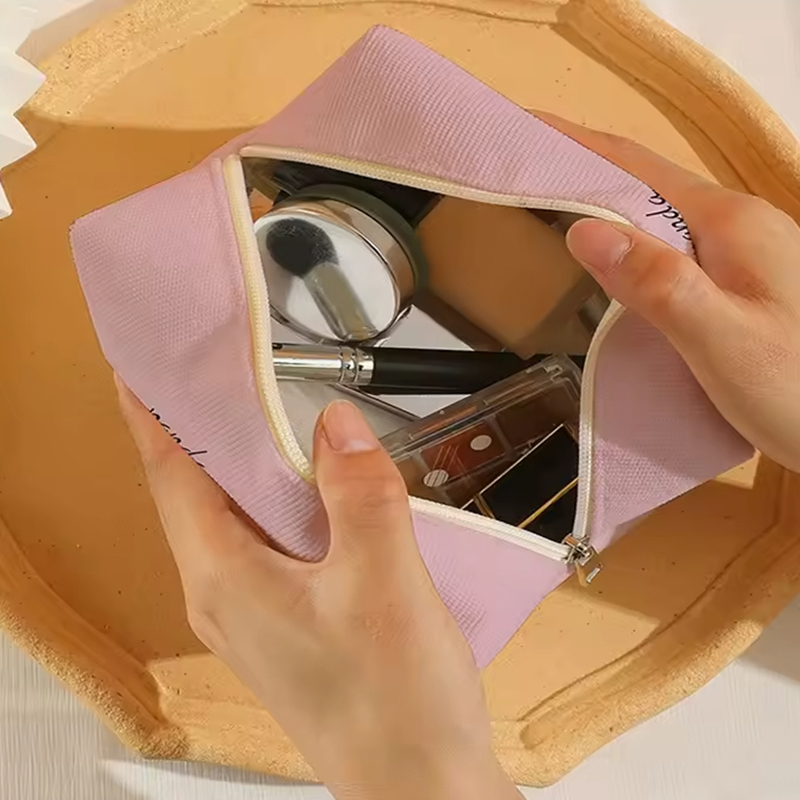
Why Do Makeup Items Need Different Storage From Toiletries
Makeup and daily washing products are often carried together, although they do not always work well in the same compartment. A bottle of cleanser has different storage needs from a compact powder case, while a makeup brush can be damaged or bent when placed underneath heavier containers.
Small cosmetic items can also disappear easily inside a deep main compartment. A flat case may slide beneath a bottle, and a narrow brush can become mixed with cords, combs or other accessories.
Separate pockets create a clearer arrangement. Flat items can sit together, brushes can stay in a narrow sleeve, and small containers can occupy a compact section. Such placement makes it easier to see what is available without emptying the whole bag.
For people who combine cosmetics with ordinary washing supplies, separation also reduces unnecessary movement. A brush does not need to sit beside a bottle, and a small cosmetic container does not need to compete with larger toiletries for the same area.
The growing number of pockets therefore reflects a practical shift in packing habits. Personal care products are no longer treated as one uniform group. Their differences in shape, material and frequency of use are influencing how internal space is arranged.
How Does Wet and Dry Separation Change Everyday Use
Moisture introduces another reason for dividing internal space. A toothbrush used shortly before leaving a hotel room may still be damp, while a towel, cleansing cloth or other recently used item can carry moisture into the bag.
Putting a damp object directly beside dry products can make the entire compartment less pleasant to handle. Paper packaging may become soft, cosmetic containers may need cleaning, and dry accessories can pick up moisture from nearby items.
A separate wet area offers a simple solution by creating distance between damp and dry belongings. Depending on the design, a dedicated section may be easy to wipe, open for ventilation or separated from the main storage area.
The important point is timing. A wet item may only need temporary isolation until it can be cleaned or dried properly. Internal separation allows that short‑term storage without forcing every other product into the same environment.
As compartment design continues to respond to real packing situations, wet and dry separation becomes less of an extra feature and more of a practical consideration. The question is no longer only how much a wash bag can hold, but how different items can remain manageable while they are being used, packed and unpacked.
Why Are Small Pockets Becoming More Purposeful
Small pockets may look insignificant when a wash bag is empty, yet their role becomes clearer once the bag is filled. Tiny personal care items tend to move around more easily than bottles or larger containers. Cotton swabs, dental floss, hair ties, clips, razors and small grooming tools can slip beneath larger products and become difficult to reach.
A separate pocket gives each group a more predictable place. Rather than placing every small object into one deep compartment, travelers can divide them according to size or how often they are used. Items needed several times a day can stay near the opening, while less frequently used accessories can sit farther inside.
Pocket shape also matters. A narrow sleeve suits a comb or brush, while a shallow section works better for flat cases. Mesh sections can make small objects easier to see, while a zipped pocket can keep loose items from falling out when the bag is opened.
Such details show why adding pockets is not simply a matter of increasing their number. A pocket has value when its size and position match the object placed inside.
Can Too Many Compartments Make Packing Less Convenient
Adding more sections does not automatically make packing easier. Once every small area has a fixed purpose, available space can become less flexible. A large bottle may not fit comfortably into a narrow section, while an empty pocket may remain unused during a short trip.
There is also a simple mental burden involved. When several pockets look similar, remembering where an item was placed can take nearly as much effort as searching through one open compartment. A layout that divides space without a clear reason may create another kind of inconvenience.
Good internal planning usually starts with the items rather than the pockets. Frequently used products need easy access, larger containers need enough room to stand or lie securely, and tiny objects need some form of containment.
A practical arrangement might follow three basic ideas:
- Keep commonly used items close to the opening.
- Give larger containers enough room to avoid unnecessary pressure.
- Reserve smaller sections for objects that tend to move or disappear.
Such an approach leaves some open space while still providing useful separation. For a Toiletry Storage Bag, balance can matter more than having a long list of compartments.
How Do Different Travel Habits Shape Compartment Layouts
Travel habits have a direct effect on how internal storage is used. Someone taking a short trip may carry only a few daily care products and prefer quick access. A longer journey can involve more containers, spare supplies and cosmetic products, making classification more useful.
The place where a bag is used also changes its requirements. A traveler may open it beside a bathroom sink, inside a hotel room or while preparing for an early departure. In each situation, digging through a crowded main section can be inconvenient, especially when several products look similar.
Packing order can become another factor. Items used during a morning routine may be grouped together, while products needed less often can remain in a deeper area. Such arrangements follow the user's habits rather than a fixed packing rule.
A Travel Cosmetic Toiletry Bag may therefore have several different internal patterns depending on its intended use. Someone carrying makeup and skin care products may need more small sections, while a traveler focused on basic washing supplies may benefit from larger open areas.
Internal layout is gradually becoming connected with routine. Storage is not only about carrying products from one place to another; it also influences how quickly they can be found and returned to their places.
What Should Manufacturers Consider When Adding More Pockets
For a Toiletry Bag Manufacturer, creating additional pockets involves more than dividing the inside of a bag into smaller pieces. Each section changes how available space is used, so its purpose needs to be considered alongside the size and shape of common personal care products.
Placement can have a noticeable effect on everyday handling. A pocket positioned near the opening may suit an item that is used often, while a deeper section can hold products that remain packed for longer periods. Sections for liquid containers need enough room for the products they are intended to hold, rather than forcing bottles into spaces that are too narrow.
Materials and construction also influence usability. Internal sections need to remain attached during repeated opening and closing, while seams and edges should not create unnecessary obstacles when products are removed. A wet area may require a surface that is easier to wipe, whereas a small accessory pocket may benefit from visibility.
Manufacturing decisions can therefore be viewed through a simple question: Does each compartment solve a real storage problem?
When the answer is clear, additional separation has a practical reason. When several pockets perform almost the same function, the internal layout may become harder to use without offering much benefit.
Will Future Toiletry Bags Focus More on Flexible Storage
Fixed compartments provide clear boundaries, although travelers do not always carry the same combination of products. One trip may involve several bottles, while another may require more cosmetics or small grooming tools. A rigid internal arrangement cannot easily adapt to every combination.
Flexible storage offers another direction. Adjustable sections, removable dividers or wider shared spaces can allow users to change the arrangement according to what they carry. Such ideas can retain some of the order provided by separate compartments while leaving room for products with unusual shapes.
The shift does not necessarily mean every wash bag needs a more complicated interior. In many cases, a small number of well‑positioned sections can work alongside one larger open area. A traveler can then separate items that need special treatment while keeping ordinary products together.
For a Toiletry Storage Bag, the balance between structure and flexibility may become increasingly important. Personal care routines vary, product packaging changes, and travel habits are not fixed. An internal layout that can adapt without becoming confusing has practical value.
More pockets, in other words, are only part of a wider change in how travel storage is being considered. Liquid products need separation, damp belongings may require temporary isolation, cosmetics have different shapes, and tiny accessories are easier to manage when they have a defined place. The growing number of compartments reflects those small everyday differences rather than a simple desire to make bags look more complex.






Copyright © Zhejiang Yisen Bags Co., Ltd. All Rights
Reserved
OEM/ODM Bag Manufacturer
