

 English
  中文简体
中文简体  Français
  Español
  italiano

What Makes a Travel Toiletry Bag Practical for Airport Checks


What Makes a Travel Toiletry Bag Practical for Airport Checks
2026-10-02
Airport security can turn a simple packing routine into a moment that genuinely requires extra organization. Toiletries may include several liquids, creams, gels, and small personal-care items, and these products often get packed together in a suitcase or carry-on without much thought. When everything is mixed together, finding one item can take genuinely longer than expected while a line builds behind you.
A practical toiletry bag can make this process genuinely easier by giving each type of item a clear place. The design doesn't need to be complicated. What matters is whether travelers can identify, retrieve, and return their toiletries without creating unnecessary mess during a security check.
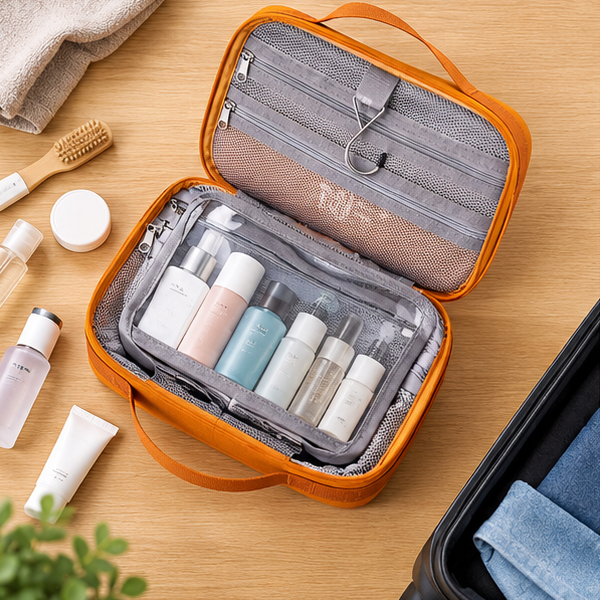
A Travel Toiletry Bag for Plane proves particularly useful when the contents need genuinely quick access. Features such as transparent sections, separate compartments, secure closures, and organized liquid storage can change how easily the bag works at an airport counter. The same ideas also matter after security, when the bag needs to stay organized inside a suitcase or carry-on for the rest of the trip.
Why Does Organization Matter During Airport Security Checks?
Airport security checks can involve unpacking or presenting certain personal-care items for inspection under time pressure. A bag filled with loose bottles and containers can make this process feel genuinely disorganized, especially when several products look genuinely similar sitting side by side.
A well-arranged toiletry bag allows travelers to recognize what they're carrying without searching through every corner of the bag. Items can get grouped according to their function or form, making retrieval feel genuinely natural rather than frantic.
| Organization Area | Practical Benefit |
|---|---|
| Liquid storage | Keeps bottles together |
| Cream and gel section | Reduces mixed contents |
| Transparent area | Makes contents easier to identify |
| Small-item section | Keeps accessories separated |
| Secure closure | Helps keep contents inside |
Organization proves useful genuinely beyond the security area itself. Once the check wraps up, travelers can return items to their proper places, instead of tossing everything loosely back into a suitcase.
How Can Liquid Categorization Make Airport Checks Easier?
Liquids are often the part of a toiletry collection that requires genuinely the most attention during travel. Shampoo, skincare products, toothpaste, lotion, and other personal-care items may all have genuinely different shapes and textures, yet they can easily become mixed together inside a bag tossed in a hurry.
A toiletry bag can simplify this by creating a dedicated area for liquid-related products. Travelers can group similar items before leaving home, rather than sorting them while standing at a security line with people waiting.
A simple organization method can start by keeping liquid products together in one spot. Separating creams and gels from dry accessories where practical helps too, along with placing frequently accessed products near an opening for quick reach. Keeping small personal-care tools away from bottles matters, along with checking the contents before leaving for the airport that morning.
The purpose isn't creating a complicated packing system worthy of an engineer. It's reducing unnecessary searching when the bag needs to open under pressure.
A Travel Toiletry Organizer Bag can support this kind of arrangement by giving different products their own spaces. The value comes from clear organization, rather than from adding compartments simply for appearance on a shelf.
Why Are Transparent Areas Useful in a Toiletry Bag?
A transparent section can genuinely change how quickly travelers recognize the contents of a bag. Instead of opening several pockets to find one bottle, the user may simply see the product through the material without unzipping anything.
This can prove especially useful when several containers get stored together in one section. Visual access reduces the need to handle every item during a security check, saving time for everyone in line.
Transparency can also help travelers notice whether a bottle has shifted or whether a cap appears loose before it becomes a problem. It provides another way to inspect the contents before the bag goes into a suitcase for the flight.
| Transparent Design | Practical Use |
|---|---|
| Clear front section | Helps identify visible products |
| Transparent pocket | Supports quick item recognition |
| Clear liquid area | Makes bottle placement easier to check |
| Partial transparent panel | Offers visibility without exposing the whole bag |
A transparent area doesn't need to cover the entire bag to be useful. A carefully placed clear section can provide genuine visibility while allowing other parts of the bag to stay covered from view.
How Does Quick Access Help During a Security Check?
Quick access is closely connected with organization overall. A bag may have enough space for every toiletry, but that doesn't help much if the items sit buried underneath other products at the bottom.
The opening structure and internal arrangement should allow travelers to reach commonly handled items without disturbing everything else stacked around them. Products likely to need attention during a security check can stay closer to the accessible area near the top.
A Travel Toiletry Bag for Plane can therefore get arranged around frequency of access rather than by category alone. Items likely to be checked or removed can remain genuinely easy to reach, while products less likely to be handled can stay in less accessible sections tucked away.
This arrangement also helps after the check wraps up. Travelers can place items back into the same area, rather than rebuilding the entire bag from scratch while a line forms.
Can Internal Separation Help Prevent Leaks?
Leak prevention is another genuinely practical concern worth planning for. A bottle may be closed securely before a trip, yet pressure, movement, or handling on a flight can still create problems if the container isn't stored carefully.
Internal separation helps limit contact between bottles and other belongings sitting nearby. If one container develops a small leak mid-flight, keeping it away from dry items can reduce the spread of liquid across the bag.
A useful internal layout may separate bottles from paper products, and liquids from electrical accessories like a phone charger. Skincare products can stay apart from makeup tools, while wet items stay clear of dry personal-care products and small loose accessories.
The purpose isn't guaranteeing that leakage can't happen at all. Instead, the bag should make it genuinely easier to contain and manage individual items when something does go wrong. A practical design may also include surfaces that wipe clean easily, making routine maintenance less troublesome after a small spill.
How Does Closure Design Affect Travel Organization?
A toiletry bag spends much of its time closed, tucked inside a carry-on. The closure therefore needs to work genuinely naturally with the way travelers pack and unpack their belongings throughout a trip.
A zipper, flap, draw-style closure, or another fastening structure can each create a genuinely different opening experience. What matters is whether the closure keeps contents contained while allowing the user to open the bag without unnecessary effort at the checkpoint.
A secure closure can also help prevent small accessories from escaping into the suitcase during transit. This proves useful when the bag moves between an airport, hotel room, bathroom, and vehicle over the course of a trip.
The closure works together with the internal layout, not in isolation. Even a secure opening can't solve the problem of items placed randomly inside the bag. Good organization comes from the relationship between the outer structure and the spaces within it.
How Can a Small Toiletry Bag Support Airport Checks?
A Small Toiletry Bag for Travel can prove useful for travelers who carry a genuinely limited personal-care collection for a short trip. Its smaller structure can make it genuinely easier to identify what's inside without opening a large number of sections one by one.
Small bags can also work as dedicated liquid organizers on their own. Instead of carrying every personal-care item together, travelers can place selected products into one compact area and keep other belongings elsewhere in the suitcase.
This approach may suit short trips or travelers who prefer a genuinely lighter packing routine overall. The important point is that the bag should still provide enough separation for the products being carried, however few they are.
A small bag becomes genuinely practical when its organization matches the user's actual needs. Size alone doesn't determine how useful it will be during an airport check.
When Can a Large Toiletry Bag Still Be Practical?
A Large Toiletry Bag for Travel can make sense when a traveler needs to carry several categories of personal-care products for a longer trip. The challenge is keeping that additional space organized, rather than letting it become a collection of loose items rattling around.
Larger bags can benefit from genuinely clear internal zones worth planning out. One area can hold liquids, another can contain dry accessories, while smaller sections keep frequently used products separate from the rest.
| Internal Zone | Suitable Contents |
|---|---|
| Liquid area | Bottles and liquid-care products |
| Dry-care area | Brushes and personal tools |
| Small-item area | Smaller accessories |
| Easy-access section | Frequently handled products |
| Separate section | Items that should stay away from liquids |
A larger bag can therefore remain genuinely practical when its space gets divided according to actual use. Extra room should support organization, rather than encourage unnecessary packing that never gets used.
How Can a Personalized Travel Toiletry Bag Improve Item Recognition?
A Personalized Travel Toiletry Bag can offer a genuinely practical advantage when several bags look similar during group travel, like a family heading to the same resort. Personal colors, names, initials, patterns, or other design choices can help a traveler recognize their own bag genuinely more easily on a crowded shelf.
Personalization can also support internal organization when the bag gets designed around specific habits. Someone who carries skincare products may need a genuinely different arrangement from someone who mainly packs oral-care products and basic toiletries for a weekend trip.
The useful part of personalization is its connection with everyday use, not decoration for its own sake. A bag can reflect the way a traveler actually retrieves and stores items, rather than simply adding decorative details that look nice but don't help.
For families or group travel, recognizable bags may also reduce the chance of confusing personal-care items between travelers sharing a bathroom counter.
How Does a Travel Toiletry Organizer Bag Help With Luggage Organization?
A toiletry bag doesn't operate genuinely separately from the rest of the luggage around it. Its shape, closure, and internal structure affect how it fits into a suitcase or carry-on packed the night before.
A well-organized bag can keep small personal-care products together, instead of allowing them to spread across different areas of the luggage during a bumpy flight. This makes unpacking genuinely easier once you reach the hotel.
The bag can also create a boundary between toiletries and clothing packed alongside it. Keeping bottles and personal-care products in one defined area reduces the chance of items moving around during travel and staining a shirt.
A Travel Toiletry Organizer Bag can therefore serve two organizational roles at once. It helps arrange the contents inside the bag itself, while also helping maintain order inside the larger piece of luggage carrying it.
What Makes Retrieval Easier After a Security Check?
Airport organization shouldn't stop the moment the inspection finishes. Travelers still need to put their belongings back into the bag before continuing through the terminal toward their gate.
A practical bag allows this to happen without much rearranging under pressure. When every product has a known place, the user can return each item to the appropriate section and simply close the bag before moving on.
This proves particularly useful when the airport environment gets busy, with limited counter space around a traveler while reorganizing belongings. Clear internal categories can make the process feel genuinely natural: liquids return to the liquid section, small tools return to their accessory area, dry products remain separate from bottles, and frequently used items stay within easy reach.
These simple habits can keep the bag organized throughout the trip, rather than only when it's freshly packed at home.
How Can Leak Prevention Support Cleaner Luggage?
A toiletry bag can genuinely influence what happens when a product leaks mid-trip. Internal isolation can reduce contact between a leaking container and unrelated items packed nearby.
Separate pockets, washable surfaces, and suitable placement can all contribute to genuinely easier cleanup afterward. A bottle shouldn't need to sit directly beside clothing or paper products when another storage area is available instead.
Leak prevention also starts before the journey even begins. Travelers can check caps carefully, avoid placing damaged containers inside the bag, and keep products in sections that suit their form and risk level.
The bag supports these habits by creating physical separation between items. It doesn't replace careful packing, but it can make the consequences of a small spill genuinely easier to manage when it happens.
How Should Travelers Choose Between Different Toiletry Bag Structures?
The right structure depends genuinely on how the traveler packs and what needs accessing during the journey ahead. A person carrying a small set of liquids may prefer a compact layout, while someone carrying several product categories may need genuinely more internal separation.
The airport environment adds another layer of consideration worth weighing. A bag should make it easy to identify contents, open the required section, retrieve an item, and organize everything again afterward without much fuss.
| Traveler Need | Useful Design Consideration |
|---|---|
| Frequent liquid access | Clearly arranged liquid section |
| Quick visual checks | Transparent area |
| Spill management | Internal separation |
| Small luggage | Compact organization |
| Several product groups | Divided internal spaces |
| Easy repacking | Clearly defined storage areas |
The choice is therefore genuinely about handling, rather than size alone printed on a label. A practical toiletry bag should fit the user's packing habits and make common travel tasks genuinely easier.
What Should Buyers Look for in a Travel Toiletry Bag for Plane?
Buyers considering a Travel Toiletry Bag for Plane can look genuinely beyond appearance and ask how the bag behaves during real travel situations, not just how it photographs. Does it make liquids easy to identify at a glance? Can the user reach commonly handled products without emptying the entire bag onto a counter? Are wet and dry items reasonably separated from each other?
The opening, transparent areas, internal pockets, closure, and cleaning surface can all genuinely affect everyday use over the course of a trip. These details become genuinely more noticeable when the bag gets opened repeatedly in different environments, from a security line to a hotel bathroom.
A practical design should also remain useful genuinely after the airport check wraps up. The same organization that helps with security can make hotel unpacking, bathroom storage, and suitcase packing genuinely easier down the line.
The key consideration is whether the structure supports a simple sequence worth remembering: identify the item, retrieve it, keep other contents organized, and return everything to its place. That approach gives a toiletry bag a genuinely useful role throughout the travel process, from packing at home to handling personal-care products after arrival.







Copyright © Zhejiang Yisen Bags Co., Ltd. All Rights
Reserved
OEM/ODM Bag Manufacturer
