

 English
  中文简体
中文简体  Français
  Español
  italiano

Which Zipper and Stitching Details Matter When Sourcing Canvas Cosmetic Bags?
Home / Blog / Industry News / Which Zipper and Stitching Details Matter When Sourcing Canvas Cosmetic Bags?
 Home / Blog / Industry News / Which Zipper and Stitching Details Matter When Sourcing Canvas Cosmetic Bags?
Which Zipper and Stitching Details Matter When Sourcing Canvas Cosmetic Bags?
2026-10-09
A canvas cosmetic bag can look great on a shelf and still turn into a headache once customers start using it. The zipper catches, threads come loose around the corners, or the seam near the opening starts to split after a few weeks. If you've ordered hundreds or thousands of bags, these aren't small problems anymore.
When sourcing canvas cosmetic bags, buyers often spend plenty of time comparing fabric colors, dimensions, printing, and prices. Zippers and stitching sometimes get less attention, even though they're the parts customers handle every day.
The details matter, but not every bag needs expensive hardware or heavy-duty construction. A small promotional pouch has different requirements from a travel bag packed with makeup brushes and bottles. The trick is to match the construction to the way the bag will be used, then make sure the factory can reproduce that quality in bulk.
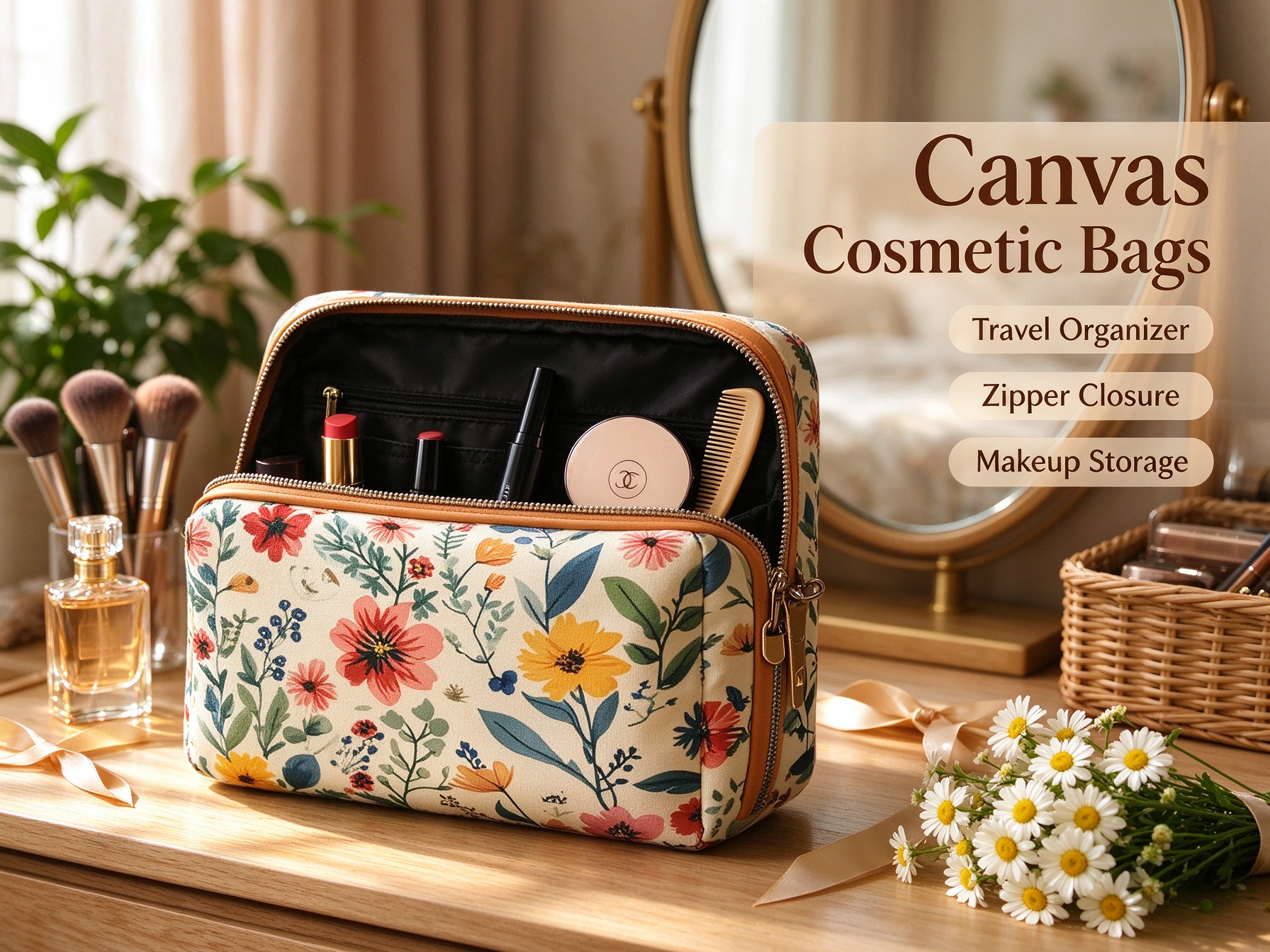
Which Zipper Material Makes Sense for Your Bag?
Most canvas cosmetic bags use nylon coil, molded plastic, or metal zippers. None is automatically suitable for every design.
|
Zipper type |
What it's like |
Where it may work well |
|---|---|---|
|
Nylon coil |
Flexible, lightweight, and easy to use on curved openings |
Everyday makeup pouches and travel bags |
|
Molded plastic |
Available in different colors and tooth styles |
Casual bags and promotional products |
|
Metal |
More noticeable and gives the bag a solid, decorative look |
Fashion accessories and structured canvas pouches |
Nylon coil zippers are a common choice for lightweight bags. They work well with flexible fabric and don't add much bulk. Molded plastic zippers can match bright canvas colors, while metal zippers may suit a heavier-looking design.
But the material alone won't tell you whether the zipper is any good. A metal zipper can still have a slider that sticks, and a plastic zipper can work perfectly well for an everyday pouch if it's properly made.
When checking a sample, try the zipper a few times. Don't give it one quick pull and call it done.
Look for:
- Teeth that close evenly without leaving gaps.
- A slider that moves without snagging the canvas.
- End stops that keep the slider from coming off.
- A pull tab that's easy to grip.
- An opening wide enough to reach the contents without awkward handling.
Then put some items inside the bag and try again. A zipper that works smoothly on an empty pouch may become difficult to pull when the bag is full.
Get the Zipper Size Right
A small pouch for lipstick and a compact doesn't need the same zipper as a travel bag carrying brushes, bottles, and several makeup products.
The size of the zipper should make sense for the opening, the fabric, and what the customer will put inside. Choosing a heavier zipper than necessary can increase costs and make a small bag feel stiff. Going too light on a larger bag can leave the closure struggling with the load.
Before approving the design, check these details:
- Bag size: Does the zipper suit the length and width of the opening?
- Contents: Will the bag carry lightweight cosmetics or several larger items?
- Opening shape: Does the zipper follow a curve without bunching up the canvas?
- Appearance: Does the pull match the style and price range of the product?
- Color: Does the zipper tape work with the fabric and overall design?
One detail that's easy to miss is how far the bag actually opens. A long zipper doesn't help much if the corners are sewn too tightly and customers have to squeeze their hands inside.
For customized orders, settle the zipper size, color, pull design, and placement before mass production. Changing them later can mean another sample round and extra costs.
Check How the Zipper Is Sewn In
Even a decent zipper can cause trouble if it's attached badly. The seam along the zipper gets pulled whenever someone opens or closes the bag, so this area needs to be sewn properly.
Start by looking at the opening. Does the zipper sit straight? Is the fabric gathered around it? Can the slider move without catching loose threads?
A few things deserve a closer look:
- Stitching along the zipper: The sewing line should stay reasonably straight.
- Fabric alignment: The two sides shouldn't look twisted or uneven.
- Zipper ends: These areas need secure finishing because they're repeatedly pulled during use.
- Seam allowance: Enough fabric should remain around the stitching to hold the zipper firmly.
- Loose threads: Remove them if they interfere with the slider or make the bag look unfinished.
Curved openings can be tricky. If the pattern isn't cut correctly or the sewing isn't handled well, the canvas may pucker around the zipper. The bag may still close, but the uneven finish can be obvious on a retail product.
Check the inside as well as the outside. A clean-looking front doesn't guarantee that the zipper tape and raw fabric edges have been finished properly inside.
For printed bags, there's another small detail to watch: the zipper pull shouldn't constantly rub against important graphics. Over time, that contact can leave marks or wear the print.
Stitching Quality Matters More Than You Might Think
Heavy canvas doesn't automatically make a durable cosmetic bag. If the seams are poorly sewn, the fabric can still separate when the bag is filled.
Stitch density is part of the picture, but there's no single stitch count that works for every design. The fabric thickness, thread size, seam construction, and sewing equipment all affect the result.
Too few stitches can leave a seam weak. Too many can also cause trouble if the needle and machine settings aren't right for the fabric.
When inspecting a sample, look for:
- Even stitches along straight seams and around corners.
- No broken threads or skipped sections.
- No loose loops on either side of the fabric.
- No obvious puckering where panels meet.
- Consistent seam width across matching parts of the bag.
Thread matters, too. Polyester thread is commonly used for bags because it offers useful strength and resists moisture-related deterioration. The appropriate thread still depends on the design and intended use.
Its thickness also affects the finished look. Thicker thread can suit a rugged canvas bag, while finer thread may look more appropriate on a small makeup pouch. Neither is automatically better.
If the order has customized colors, confirm the thread color with the factory. This is especially important when the design uses contrasting stitching, where any variation becomes much easier to see.
Don't Overlook Corners, Handles, and Other Stress Points
A bag rarely wears out evenly. Some areas get pulled and rubbed much more than others, particularly the bottom corners, zipper ends, side seams, and handle attachments.
|
Bag area |
What can go wrong |
What to check |
|---|---|---|
|
Bottom corners |
Fabric wear or seams opening |
Stitching and corner finishing |
|
Zipper ends |
Threads coming loose |
Secure seam termination |
|
Side seams |
Separation when the bag is full |
Seam allowance and stitch quality |
|
Handles |
Attachment pulling away |
Reinforcement and stitching |
|
Lining |
Loose fabric or exposed edges |
Interior finishing |
|
Gussets |
Bag becoming misshapen |
Panel alignment and seam consistency |
Manufacturers can reinforce these areas with extra stitching, backstitching, or reinforcement patches. The right approach depends on the bag.
A flat pouch for a few small cosmetics doesn't necessarily need the same construction as a travel bag with a wrist strap. Adding too many layers can make a smaller product bulky and increase production costs without solving a real problem.
A useful sample check is to fill the bag with items similar to those it will carry in actual use. Open and close it, handle it normally, and look at the corners and seams afterwards. If the fabric pulls noticeably or a seam begins to separate, the construction needs attention before production.
Canvas Weight and Stitching Need to Work Together
Canvas weight is usually measured in ounces per square yard or grams per square meter. It's useful when comparing fabrics, but heavier fabric doesn't automatically mean a stronger finished bag.
Weave, yarn quality, finishing, and sewing all play a role. A heavy canvas bag can still have weak seams if the stitching isn't suitable.
Thick fabric also creates its own sewing challenges. Where several layers meet, the machine may struggle to feed the material evenly. Poor settings can leave bulky corners, irregular stitches, or visible needle damage.
Lighter canvas, meanwhile, can work well for foldable pouches and promotional bags when the design and stitching suit the intended use.
When comparing samples, try these checks:
- Fill the bag and see whether it holds its shape.
- Look at the corners where several fabric layers meet.
- Open and close the zipper to see whether the top panels stay aligned.
- Check whether the seams look consistent on both sides.
- Compare the construction with the product's intended price range.
The aim isn't to choose the heaviest canvas available. It's to find a combination of fabric and construction that makes sense for the product.
Test Samples Before Ordering in Bulk
A sample is more than something to photograph or approve for color. It's a chance to catch problems before they show up across a large order.
Zipper test: Open and close the bag repeatedly. Watch for sticking, separated teeth, fabric getting caught, or a pull that becomes difficult to move when the bag is full.
Seam check: Examine the inside and outside under good lighting. Look for broken threads, loose ends, uneven stitching, and fabric that appears strained. Apply reasonable hand pressure around the corners and zipper ends to check for obvious weaknesses. Formal strength testing may be needed for products with specific performance requirements.
Loaded bag test: Put in makeup compacts, brushes, and travel-size bottles, depending on the intended use. Check whether the zipper still works smoothly and whether the seams or corners become distorted.
Appearance check: Look at zipper placement, thread color, lining, print position, and the overall shape. Small defects can be more noticeable on customized products than on plain bags.
Once the sample has been approved, keep it as the reference for mass production. If the factory needs to change the fabric, zipper, thread, or sewing method, ask to review the change before production continues.
What Details Should Go Into the Supplier Specification?
Descriptions such as "premium zipper" or "high-quality stitching" don't give the factory much to work with. Buyers need details that can actually be checked.
|
Specification |
Details to confirm |
|---|---|
|
Canvas |
Composition, weight, color, and finish |
|
Zipper |
Type, size, color, and pull design |
|
Zipper attachment |
Seam appearance and end reinforcement |
|
Stitching |
Thread material, color, and workmanship |
|
Stress points |
Required reinforcement |
|
Dimensions |
Bag size, gusset depth, and lining |
|
Branding |
Printing or embroidery position |
|
Quality control |
Inspection criteria and defect categories |
|
Packaging |
Individual packaging and carton requirements |
For bulk orders, agree on what counts as an acceptable finish. For example, the zipper should open and close properly, the seams shouldn't have broken stitches, and dimensions should stay within the agreed tolerances.
It also helps to discuss how defects will be handled. A loose thread that can be trimmed is different from a seam that opens under ordinary use. Both sides should understand the difference before inspection begins.
Compare Suppliers Beyond the Quoted Price
Two factories may quote different prices for what looks like the same canvas cosmetic bag. Before choosing the lower price, find out what's actually included.
The difference might come from lighter canvas, a different zipper, less reinforcement, or fewer finishing steps. That may be fine for a promotional pouch, but it's worth thinking twice if the bag is intended for regular retail use.
Ask the supplier:
- Can you provide a sample using the proposed fabric and zipper?
- Can the zipper, thread color, dimensions, and branding be customized?
- How are the zipper ends and high-stress seams finished?
- Which workmanship defects are checked during production?
- How are changes after sample approval handled?
- What are the minimum order quantities for custom colors and printing?
- Can the same specifications be maintained for repeat orders?
For repeat purchases, keep the approved sample and written specifications on file. This gives both sides something concrete to refer to if the fabric, zipper, or construction changes in a later production run.
Getting the Details Right Before Production
With canvas cosmetic bags, the zipper and stitching don't need to be complicated. They just need to suit the way the bag will be used.
A small promotional pouch may need a lightweight zipper and straightforward construction. A larger travel bag carrying bottles and brushes needs more attention around the opening, corners, and seams.
Test the sample with realistic contents, settle the construction details with the manufacturer, and keep an approved reference for bulk production. That approach makes it easier to spot problems early and helps keep the finished bags consistent with the original design and budget.






Copyright © Zhejiang Yisen Bags Co., Ltd. All Rights
Reserved
OEM/ODM Bag Manufacturer
