

 English
  中文简体
中文简体  Français
  Español
  italiano

How a Custom Racket Bag Protects Multiple Rackets During Travel


How a Custom Racket Bag Protects Multiple Rackets During Travel
2026-06-26
Traveling with rackets presents several risks. The rackets get checked as baggage or carried through airports. They are handled by multiple people. They are stacked with other luggage. The rackets need protection from the journey.The risk of damage increases with multiple rackets. Each racket can damage the other. The rackets shift during travel. The rackets rub against each other. The rackets need separation to prevent damage.
What Structural Elements Define a Custom Racket Bag
The structure of a Custom Racket Bag determines how well it protects the rackets. The bag must hold the rackets securely. The bag must absorb impacts. The bag must maintain its shape. The structure provides the foundation for protection.
Dedicated compartments keep rackets separate. Each compartment holds one racket. The rackets do not touch each other. The separation prevents friction damage. The compartments organize the rackets.
Padding provides impact protection. The padding absorbs shock from drops. The padding distributes pressure. The padding protects the racket frame. The padding is placed at key points around the rackets.
Rigid panels maintain the bag shape. The panels prevent the bag from bending. The panels protect against crushing. The panels provide a hard outer layer. The structure of a Custom Racket Bag combines these elements.
| Element | Function | Protection Provided |
|---|---|---|
| Compartments | Separate rackets | Prevent friction |
| Padding | Absorb impact | Protect from drops |
| Rigid panels | Maintain shape | Prevent crushing |
| Lining | Protect surfaces | Prevent scratches |
| Zippers | Secure contents | Keep compartment closed |
How Do Compartment Configurations Support Multiple Racket Storage
The compartment design determines how many rackets the bag holds. Each compartment should fit one racket. The compartment should hold the racket securely. The racket should not move within the compartment.
Individual sleeves provide the highest level of protection. Each racket goes into its own sleeve. The sleeve separates the racket from others. The sleeve provides padding. The sleeve prevents contact damage.
Shared compartments hold multiple rackets. The rackets share the space. The rackets may touch each other. The contact can cause damage. A Custom Racket Bag uses compartment configurations that match the number of rackets.
The compartment size should match the racket. A compartment too large allows movement. A compartment too small stresses the racket. The size should be correct. The fit should be snug but not tight.
What Material Choices Affect Racket Protection During Transit
The materials used in a Custom Racket Bag affect the protection level. The outer fabric resists abrasion. The padding absorbs impact. The lining prevents scratching. The materials work together to protect the rackets.
The outer fabric should be durable. The fabric withstands rough handling. The fabric resists tears and punctures. The fabric protects the contents. A Custom Racket Bag uses durable outer materials.
Water resistance protects against moisture. Rain and spills can damage rackets. The fabric should repel water. The moisture should not reach the rackets. The water resistance keeps rackets dry.
The lining should be soft. The lining touches the racket surface. A rough lining can scratch the racket. A soft lining protects the surface. The lining should not react with the racket material.
How Does Padding Distribution Reduce Travel Impact
Padding placement matters for protection. The padding should be at the right locations. The padding should be the right thickness. The padding should absorb impact effectively.
The bottom of the bag needs padding. The bottom receives impact when set down. The padding protects the racket ends. The padding absorbs the impact. The racket remains safe.
The corners need reinforcement. The corners receive impact from drops. The corners can be damaged easily. The reinforcement protects the corners. A Custom Racket Bag includes corner padding.
The handle area needs padding. The handle is frequently handled. The handle area sees stress. The padding protects the rackets near the handle. The protection extends throughout the bag.
What Accessory Features Support Travel Convenience
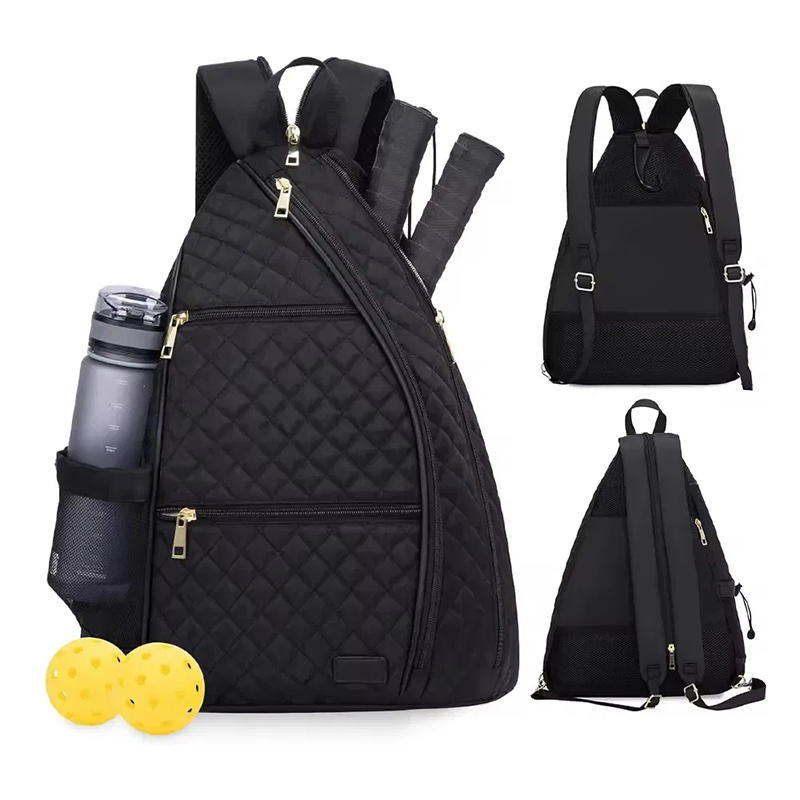
A good racket bag does more than hold rackets. The bag also carries accessories. Players need space for other items. The accessory features add convenience to travel.
External pockets provide storage for small items. Grips, strings, and tape fit in these pockets. The pockets keep accessories accessible. The player does not need to open the main compartment. The external pockets save time.
Wet pockets serve a specific purpose. Damp clothes or towels go in these pockets. The wet pocket isolates moisture. The moisture does not reach the rackets. The rackets stay dry and protected.
Backpack straps improve carrying comfort. The straps distribute weight across both shoulders. The bag is easier to carry. The hands are free. A Custom Racket Bag with backpack straps offers convenience.
The handle design matters for carrying. The handle should be comfortable. The handle should be durable. The handle should be placed for balance. A good handle makes carrying easier.
How Does Bag Size and Capacity Planning Affect Protection
The size of the bag affects protection. A bag too large allows movement. A bag too small forces compression. The correct size provides proper fit.
The number of rackets determines the size. A bag for two rackets is smaller. A bag for six rackets is larger. The size should match the count. A Custom Racket Bag should be sized for the intended use.
Overpacking reduces protection. The bag becomes too full. The rackets press against each other. The padding compresses. The protection decreases. The bag should not be overpacked.
The bag shape affects storage. A rectangular shape holds rackets well. A tapered shape may not. The shape should match the rackets. The shape affects how the bag fits in overhead compartments.
What Quality Indicators Distinguish Well-Constructed Custom Bags
Quality construction shows in the details. The zippers should be strong. The stitching should be even. The materials should be consistent. The quality affects durability and protection.
Zippers secure the compartments. A broken zipper opens the bag. The contents may fall out. The protection fails. Good zippers prevent this problem. A Racket Bag uses quality zippers.
Stitching holds the bag together. The stitching should be strong. The stitching should be even. Loose stitching creates weak points. The bag may fail at those points.
- Even, tight stitching throughout
- Smooth zipper operation
- Consistent material thickness
- Reinforced stress points
- Quality hardware and fasteners
The material finish indicates quality. A consistent finish shows care. An inconsistent finish suggests problems. The quality should be visible.
What Maintenance Practices Preserve Custom Bag Protection
Maintenance keeps the bag performing well. The bag needs care like any other item. Simple practices extend the bag life. The protection continues with proper care.
Regular cleaning removes dirt and stains. The cleaning method depends on the material. Some materials wipe clean. Others need special care. A Racket Bag should be cleaned according to the material type.
Proper storage maintains the bag shape. The bag should be stored in a cool, dry place. The bag should not be crushed. The bag should maintain its padding. The shape supports the protection.
The zippers need occasional attention. The zippers can get stuck. The zippers can wear. Lubrication helps the zippers. The zippers should be inspected regularly.
The repairs should be done promptly. Small problems become big problems. The stitching can be repaired. The zippers can be replaced. Prompt repairs extend the bag life.
What Factors Guide Racket Bag Selection for Travel Needs
Selecting a racket bag involves several factors. The player should consider their needs. The bag should match the travel patterns. The bag should provide adequate protection.
The number of rackets determines the bag capacity. A player carrying two rackets needs a smaller bag. A player carrying six rackets needs a larger bag. The capacity should match the racket count. A Racket Bag should be sized appropriately.
The travel frequency affects the bag choice. Frequent travelers need durable bags. Occasional travelers may accept lighter bags. The durability should match the use. The bag should hold up to the travel pattern.
- Number of rackets carried
- Frequency and duration of trips
- Storage space available at home
- Carrying preference (backpack or shoulder)
- Budget for the bag
The storage space affects the bag choice. A larger bag needs more storage space. A smaller bag is easier to store. The space should be considered.
The carrying preference affects comfort. Some players prefer backpack straps. Others prefer shoulder straps. The preference should be matched. The comfort affects the travel experience.
The budget limits the options. Quality bags cost more. Lower cost bags may lack features. The budget should be balanced against needs. A Custom Racket Bag within budget meets the player's requirements.





Copyright © Zhejiang Yisen Bags Co., Ltd. All Rights
Reserved
OEM/ODM Bag Manufacturer
