

 English
  中文简体
中文简体  Français
  Español
  italiano

How to Clean a Small Canvas Makeup Bag After Daily Use


How to Clean a Small Canvas Makeup Bag After Daily Use
2026-06-05
A Small Canvas Makeup Bag usually sits very close to daily routines, moving between bathroom counters, handbags, and travel spaces, and over time the fabric slowly collects layers of cosmetic dust, cream traces, and fine powder particles that do not stay on the surface only, since canvas weave tends to hold onto small residue inside its structure in a way that becomes more noticeable after repeated use rather than a single moment of contact.
Daily makeup use rarely creates one clear type of stain, instead it builds a mixed pattern where loose powder drifts into corners during handling, liquid foundation leaves faint uneven marks that deepen after drying, and small oil traces from skincare products settle quietly along seams where airflow is limited and cleaning action does not easily reach.
What Conditions Lead to Dirt Build Up in a Small Canvas Makeup Bag
A Small Canvas Makeup Bag gradually changes in appearance not because of one heavy spill, but because of repeated light contact that seems harmless at first, while each use leaves behind tiny fragments of product that slowly accumulate in different layers of the fabric.
Cosmetic handling during daily routines creates several small transfer points that are easy to overlook:
- powder dust released during brush or sponge use
- cream residue transferred from caps or applicators
- liquid traces from partially closed containers
- fine glitter particles slipping into stitching gaps
- moisture from tools mixing with dry residue inside corners
Canvas behaves like a woven net under close view, and once particles enter that structure they do not easily return to the surface, which is why even a clean-looking bag may still hold buildup inside deeper fiber layers.
How Canvas Material Responds to Regular Cleaning Methods
Canvas fabric has a texture that feels stable from the outside, yet inside the weave there is enough space for particles to settle, so cleaning often becomes a process of gradual lifting rather than instant removal, especially when cosmetic residue has already mixed with moisture and dried inside the fibers.
When water and mild cleaning solutions touch canvas, surface stains begin to loosen first, while deeper marks release more slowly, and this difference creates a situation where visible improvement appears quickly but hidden residue may still remain unless repeated gentle cleaning is applied.
Typical behavior during cleaning includes:
- surface powder lifting after light moisture contact
- deeper cosmetic residue loosening gradually over time
- stitched areas holding particles longer than flat surfaces
- slight texture change during drying stage
- uneven stain release depending on fabric density
Because of this structure, strong scrubbing often does not improve results significantly and may instead disturb fabric alignment, so slower and more controlled cleaning tends to keep the material stable.
Which Cleaning Approach Works for Light Daily Stains
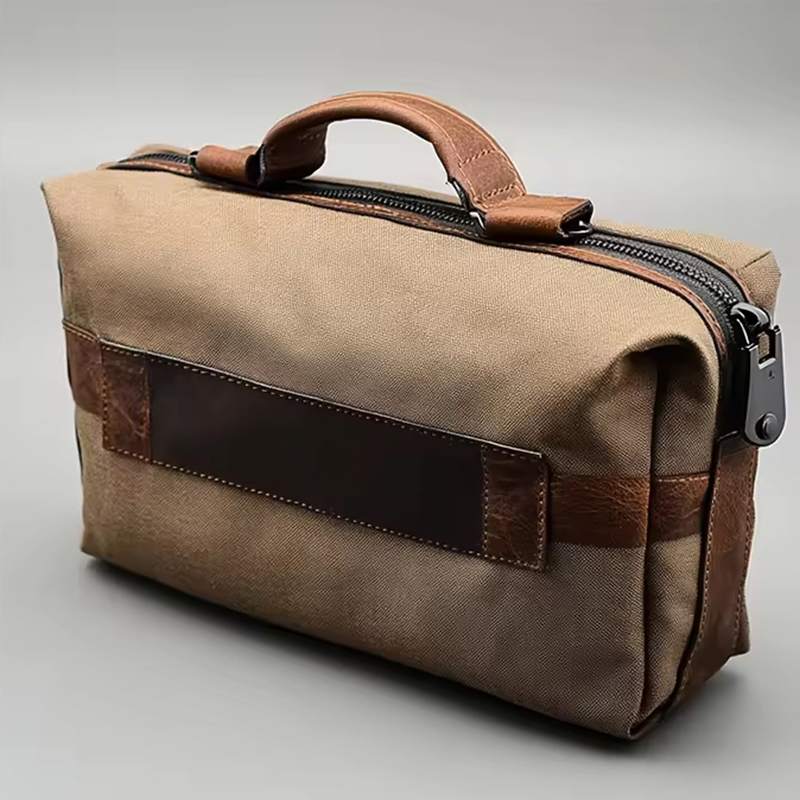
Light stains on a Small Canvas Makeup Bag usually come from everyday contact rather than accidental spills, so treatment focuses more on surface correction than deep extraction, especially when buildup has not yet reached inner fabric layers.
A practical cleaning flow often starts in a very simple way, where the bag is fully emptied and gently shaken to release loose powder that has not attached firmly to fibers, followed by light tapping that helps dislodge particles near zipper edges and inner folds where airflow is weak.
After surface debris is reduced, small stained areas can be treated using a mild soap solution applied on a soft cloth or brush, moving in slow circular motion rather than forceful rubbing, since canvas reacts better to repeated light passes than strong single pressure.
A gentle cleaning rhythm often includes:
- emptying all compartments completely before cleaning
- shaking out loose cosmetic powder over a container
- applying mild cleaning solution only on visible marks
- using soft brushing motion instead of hard scrubbing
- allowing natural air drying without heat exposure
Even after light cleaning, fabric often continues to release small hidden particles during drying, which is part of normal canvas behavior rather than a sign of incomplete cleaning.
| Cleaning Method | Suitable Situation | Action Style | Result Behavior |
|---|---|---|---|
| Dry shaking | Loose powder and dust | Light tapping and shaking | Surface particles fall away easily |
| Soft brushing | Corner dust buildup | Gentle directional brushing | Removes particles in folds |
| Mild soap wiping | Light foundation marks | Circular soft wipe | Gradual stain fading |
| Damp cloth press | Small oil traces | Light pressing motion | Slow lifting from fibers |
| Air drying | After any cleaning step | Natural airflow drying | Fabric shape stabilizes |
How to Treat Stubborn Cosmetic Marks Inside Fabric Layers
When cosmetic residue settles deeper into a Small Canvas Makeup Bag, the cleaning process naturally slows down because the stain is no longer sitting on the surface but embedded between woven fibers where movement is limited and moisture penetration happens unevenly.
Instead of trying to remove everything in one pass, repeated gentle contact tends to work more steadily, where a slightly damp cleaning tool touches the same area multiple times, allowing residue to soften and lift gradually without breaking fabric structure.
Oil-based marks from makeup products usually behave differently from powder stains, since they tend to spread slightly into surrounding fibers before settling, which makes them harder to remove quickly, so mild detergent interaction combined with patience becomes more effective than strong friction.
In deeper cleaning situations, the process often follows a slow layered rhythm:
- light moistening of stained area to soften residue
- gentle brushing to loosen surface binding
- repeated passes instead of single strong scrubbing
- gradual lifting of oil-based traces over time
- controlled drying between cleaning cycles
Fabric tends to respond better when cleaning is spread out rather than compressed into a single intense attempt, since canvas fibers recover shape more easily when pressure remains low and consistent.
How to Handle Internal Lining and Corner Areas
Inside a Small Canvas Makeup Bag, the lining and stitched corners usually behave differently from flat areas, not because they collect more use, but because airflow barely reaches those narrow spaces and residue has a habit of drifting there quietly during normal daily handling.
Powder dust tends to slide down into folds, cream traces move slowly along seams, and once these small leftovers settle into stitching lines, they do not move easily again. Cleaning in those zones often feels less like removing dirt and more like slowly loosening something that has already blended into the fabric structure.
Work in tight areas usually depends on small movement rather than broad wiping, since canvas folds respond better when motion follows the seam direction instead of crossing over it.
Common handling approach:
- gently lift inner lining where structure allows
- follow stitching lines instead of scrubbing across them
- keep moisture light so seams do not stay wet too long
- repeat soft brushing rather than forcing removal
- focus on corners where residue gathers quietly
Corners rarely clear in a single pass, and that slow release is simply how woven fabric behaves once particles settle deep inside.
What Cleaning Agents Are Suitable for Canvas Fabric
Canvas used in a Small Canvas Makeup Bag reacts more steadily to mild cleaning solutions, especially those that stay close to neutral strength, since strong chemicals can disturb the fabric balance and leave uneven texture after drying.
Soap mixed with water often works in a simple, controlled way, softening cosmetic residue without pushing it deeper into fibers. Warm water helps loosen buildup slightly, although extreme heat is unnecessary and can affect fabric feel after repeated use.
Common gentle options include:
- diluted soap water for surface stains
- low-strength detergent for oil-based marks
- lightly damp cloth for controlled wiping
- soft foam mixture that rinses clean
Heavy cleaning agents are usually avoided in regular care because canvas tends to show subtle changes in texture when exposed repeatedly, especially around stitched areas where layers overlap.
How Drying and Reshaping Affect Final Appearance
After cleaning, a Small Canvas Makeup Bag enters a stage where shape becomes more sensitive than during washing, since the fabric stays flexible and slightly heavy with moisture, which means structure can shift depending on how it is left to dry.
Air drying works slowly but steadily, allowing moisture to leave without stressing the weave. That slow drying process gives canvas time to return to its natural form, while fast drying or heat exposure can sometimes leave uneven stiffness in certain spots.
During this stage, small adjustments by hand often help maintain shape, especially around edges and base areas where canvas relaxes more when damp.
Drying behavior usually looks like:
- fabric slowly regaining firmness as water leaves
- corners tightening back into shape gradually
- stitched lines settling after moisture reduction
- slight reshaping needed during early drying
- texture stabilizing only after full dryness
Canvas does not reset instantly. It settles, slowly and quietly, into whatever position it holds during drying.
How Storage Habits Influence Future Cleanliness
After cleaning, how a Small Canvas Makeup Bag is stored often decides how quickly it becomes dirty again. Even without heavy use, small repeated contact between cosmetic items and fabric slowly rebuilds residue in the same places over time.
Powder containers that are not fully closed, brushes that still carry product, or cream lids with leftover traces all create small transfer points that repeat every day, and those small transfers add up more than it seems at first glance.
Simple habits can reduce buildup:
- closing cosmetic containers tightly after use
- separating wet tools from dry products
- avoiding tight packing inside the bag
- giving short airflow before storage
- wiping product surfaces before placing them inside
Less contact means slower buildup, and slower buildup means cleaning stays lighter.
When Routine Cleaning Becomes More Necessary
Cleaning frequency is not fixed for a Small Canvas Makeup Bag, since usage style changes everything. Some routines create light surface dust, while others slowly push residue deeper into fabric without obvious signs at the beginning.
Need for more frequent cleaning usually shows up through small changes rather than sudden marks:
- corners turning slightly darker
- fabric feeling less soft in certain areas
- uneven tone across inner lining
- faint oily patches near seams
- powder buildup returning quickly after cleaning
When these signs appear, lighter but more regular cleaning tends to work better than waiting for heavy buildup, since canvas responds more smoothly to repeated gentle care than to rare intensive cleaning.









Copyright © Zhejiang Yisen Bags Co., Ltd. All Rights
Reserved
OEM/ODM Bag Manufacturer
