

 English
  中文简体
中文简体  Français
  Español
  italiano

How Does a Toiletry Storage Bag Use Space Better


How Does a Toiletry Storage Bag Use Space Better
2026-08-14
A bag can appear roomy when empty and still become crowded soon after packing. Outer dimensions give only part of the picture. Usable space also depends on how bottles, pockets, zippers, and internal walls interact with one another.
Bottle shape is an easy example. A round container placed beside a square one can leave a narrow gap that is difficult to use. Several small containers may create similar spaces, especially when each item is placed without a clear arrangement. Internal organization can either reduce such gaps or create more of them.
Opening design also affects how much space feels available. A narrow zipper opening may make a deep compartment difficult to reach, even when unused space remains below or toward the sides. Some travel organizers use wider openings or fold-down sections to improve visibility and access.
A practical storage design therefore needs to consider both capacity and access. Space that cannot be reached easily has limited value during packing.
How Does Bottle Shape Affect Available Space
Travel toiletries rarely have identical shapes. Shampoo, cleanser, lotion, toothpaste, shaving products, and cosmetic containers can have round, flat, tall, short, or irregular forms. Mixing such shapes inside one open compartment can quickly produce gaps.
Tall bottles often use vertical space efficiently when they can remain upright. Short containers may fit around them, while flat items can slide into narrow sections along the sides.
Packing direction also changes the result. Laying every bottle horizontally may use floor space while leaving unused height above. Standing suitable containers upright can make better use of internal depth, provided the closure is secure and the bag remains stable.
Travel size toiletries can make packing easier because smaller containers offer greater flexibility. Smaller does not automatically mean easier to organize, though. A group of tiny bottles can spread across an open compartment and occupy more practical space than expected.
A useful arrangement can follow a simple pattern:
- Tall bottles stay together
- Flat items use narrow spaces
- Small accessories go into pockets
- Flexible items fill gaps around larger containers
- Frequently used products remain near the opening
Such grouping reduces random gaps and makes removal easier.
Why Does Compartment Layout Matter
Internal compartments can make packing clearer, although adding more sections does not automatically create more usable capacity. Each divider takes some physical space and may prevent larger containers from fitting together.
A large open section works well for bottles with different shapes because items can shift into available gaps. Separate pockets become useful when small products need to stay visible or when certain items should remain apart.
A balanced layout can combine both approaches. Open space handles irregular or bulky items, while smaller pockets control loose accessories.
Current toiletry organizer designs commonly combine open compartments with mesh sections, zippered pockets, or elastic holders, allowing different item types to occupy different areas.
| Item Type | Useful Storage Area | Packing Reason |
|---|---|---|
| Tall bottles | Upright section | Uses internal height |
| Small tubes | Mesh or narrow pocket | Easy to see and reach |
| Toothbrush | Separate holder | Keeps it apart from loose items |
| Flat accessories | Shallow pocket | Avoids unused gaps |
| Larger containers | Open compartment | Allows flexible positioning |
Compartment planning should reflect actual travel habits. Someone carrying several bottles needs different internal space from someone carrying mainly small cosmetic items.
Where Does Dead Space Appear Inside a Toiletry Bag
Dead space often develops in places that are difficult to reach or too narrow for another item. Corners are common examples, especially when a rigid rectangular compartment meets rounded containers.
Gaps can also appear between bottles with different diameters. A narrow space between two larger containers may be too small for another bottle, yet wide enough to remain visibly empty.
Internal dividers can create similar areas. A fixed pocket may be convenient for one product size while becoming awkward when a larger container needs to be packed.
Flexible walls can respond differently because they can move around the contents. A softer structure may allow containers to sit closer together, while a structured design can help maintain order and protect items from shifting.
Good space planning does not mean filling every gap. Small empty areas can make removal easier and prevent excessive pressure on bottles. Practical capacity is more about useful arrangement than making every section completely full.
How Does the Zipper Opening Affect Usable Space
Zipper placement can change how a bag is packed. A deep compartment with a small opening may hold several items, yet placing a large bottle inside can be awkward because the opening does not provide enough room for easy access.
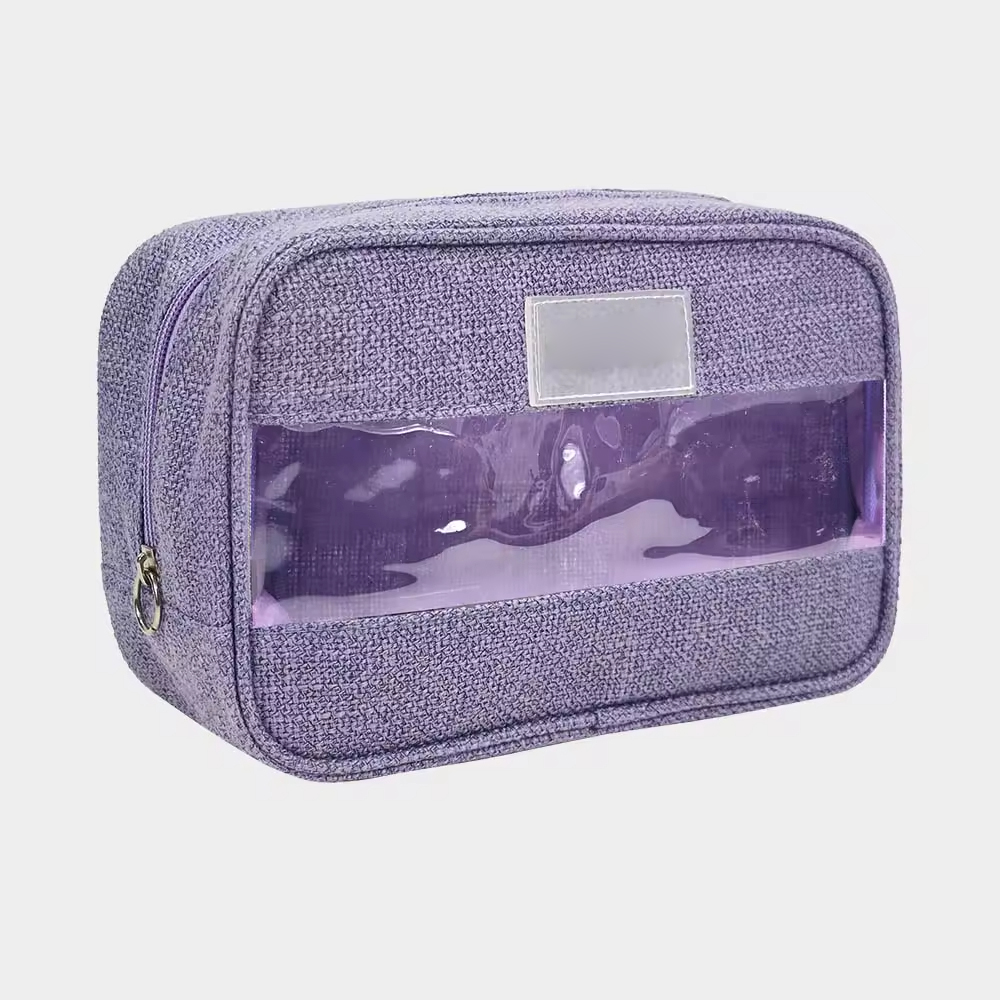
A wider opening gives the hand a clearer path into the compartment. Fold-down and clamshell-style designs are also used to expose more of the interior during packing and access.
Opening direction matters as well. A zipper that runs across only part of the upper edge can limit visibility toward the corners. A longer opening can reveal more of the interior and make it easier to judge remaining space.
For everyday travel, access and capacity should therefore be considered together. A compartment is more useful when its contents can be placed, viewed, and removed without disturbing everything around them.
Why Can Vertical Storage Make a Difference
Internal height is sometimes overlooked because packing tends to happen across the bottom of a bag. Tall bottles can then be placed sideways, leaving unused space above them.
Vertical storage changes that arrangement. Bottles stand along the height of the compartment, while smaller products can occupy nearby areas. Some organizer designs use elastic loops or dedicated holders to keep narrow items upright during movement.
Vertical placement also improves visibility. When several containers stand side by side, labels and shapes are easier to distinguish than when everything lies in one pile.
Stability still matters. Bottles should remain secure during transport, and closures need to stay properly closed. Vertical storage works best when internal depth, opening height, and container shape are considered together.
For a Toiletry Storage Bag, internal height can therefore be just as useful as width. Increasing exterior width alone may not solve a packing problem when much of the available height remains unused.
How Do Mesh Pockets Help With Small Toiletries
Small toiletries can become difficult to manage when they are placed together in one open compartment. Toothbrushes, razors, cotton items, small tubes, and cosmetic accessories may shift around during travel, making a bag feel crowded even when some internal space remains unused.
Mesh pockets offer a simple way to separate smaller items while keeping them visible. Because the material is see-through, users can identify contents without opening every section. Travel organizers commonly use mesh for small accessories and items that benefit from quick access.
Pocket depth still needs careful consideration. A shallow mesh section can suit flat items, while a deeper pocket can hold small bottles or thicker accessories. Excessively deep pockets may create another problem because small objects can settle at the bottom and become harder to reach.
Placement also matters. A pocket located near the opening can work well for items used frequently, while a less accessible section can hold products needed only occasionally.
For a Travel Cosmetic Toiletry Bag, mesh storage can therefore support both visibility and separation without dividing the entire interior into rigid sections.
How Should Travel Size Toiletries Be Arranged
Travel size toiletries come in many shapes, so simply placing them together may not make good use of available space. A small bottle can fit beside a taller container, while a flat tube may occupy an edge that would otherwise remain unused.
Grouping products according to shape provides a practical starting point. Tall containers can share one area, shorter bottles can sit nearby, and flat accessories can fill shallow spaces.
A useful arrangement might look like:
- Tall bottles placed upright where internal height allows
- Flat tubes positioned along side walls
- Small accessories stored in mesh pockets
- Toothbrushes or razors placed in separate narrow sections
- Frequently used items kept close to the zipper opening
Elastic loops can also help hold narrow objects upright. Some current travel organizers combine loops, mesh pockets, and open sections so that different item shapes can share one interior without requiring a separate compartment for every product.
Packing should leave enough room for natural movement. Overfilling every pocket can make a zipper difficult to close and may place pressure on bottles. A little open space can make removal easier.
What Makes a Travel Cosmetic Toiletry Bag Easier to Pack
Ease of packing comes from the relationship between several design features rather than from one compartment alone. Opening width, internal depth, pocket placement, and flexibility all affect how easily toiletries can be arranged.
A wide opening allows the user to see more of the interior while packing. A deep main section can hold larger containers, while shallow pockets can handle smaller items without allowing them to disappear underneath bottles.
Some layouts use a fold-down arrangement so that more of the interior becomes visible when opened. Others use a wide zipper path to provide access to a larger section. Current travel bag designs show both approaches, with mesh pockets and separate storage areas commonly used alongside an open main compartment.
| Storage Area | Suitable Items | Main Purpose |
|---|---|---|
| Main compartment | Bottles and larger containers | Flexible storage |
| Mesh pocket | Small tubes and accessories | Visibility |
| Narrow pocket | Toothbrush or razor | Separation |
| Side section | Flat products | Use of edge space |
| Upright section | Taller containers | Use of internal height |
Such organization reduces the need to move several items when one product is needed.
How Can Toiletry Storage Bag Design Reduce Wasted Space
Reducing wasted space does not necessarily mean making every compartment smaller. A better approach is to make internal sections work with the shapes of products people actually carry.
Bottle geometry should be considered during layout planning. Rounded bottles need room around their curved edges, while rectangular containers can sit closer together. Flat tubes can occupy spaces along walls that might otherwise remain unused.
Flexible internal walls can also adapt to changing contents. A traveler carrying several bottles on one trip may need a different arrangement from someone carrying mainly cosmetics and small accessories.
Zipper placement has a similar influence. A compartment may have useful depth, yet a narrow opening can make part of that depth difficult to reach. Wider or extended openings can make packing and removal easier by exposing more of the interior.
Vertical storage provides another option. Rather than treating width and length as the only usable directions, internal height can support upright bottles, brushes, and other narrow products. Such layouts can also improve visibility because items are less likely to form a flat pile.
What Should Be Considered When Designing Internal Storage
Good interior planning usually begins with the items rather than the outer shape of the bag. Designers need to consider how bottles vary in size, how small accessories move during travel, and which products need quick access.
Too many fixed compartments can divide useful space into small sections that are difficult to adapt. Too little organization can leave small products scattered among larger containers.
A balanced design can include:
- One flexible open area
- Several pockets for smaller products
- Mesh sections for visibility
- Space for upright containers
- An opening wide enough for comfortable access
- Flexible areas that can accommodate changing contents
Wet and dry items also deserve separate consideration. Toothbrushes, razors, and recently used products may need ventilation or separation from cosmetics and clothing. Mesh can support visibility and airflow, although pocket material alone does not prevent leaks from spreading through a bag.
Cleaning access is another practical concern. Toiletry products can leak, so surfaces around storage sections should be reasonably easy to inspect and clean.
How Is Toiletry Bag Space Design Changing Travel Organization
Travel organization is gradually shifting away from simply making a bag larger. Practical capacity depends on how much of the interior can actually be used, reached, and rearranged.
A Toiletry Storage Bag with a thoughtful internal layout can make better use of available room by combining open storage, pockets, mesh sections, and vertical placement. Bottle shape, zipper position, and compartment depth all influence how much space remains useful after packing.
For a Travel Cosmetic Toiletry Bag, flexibility becomes particularly relevant because travel contents change from one trip to another. One journey may involve several travel size toiletries, while another may require more brushes, cosmetics, or small accessories.
Internal design therefore needs to leave room for variation. A practical storage system should guide organization without forcing every item into a fixed location.
When bottle shapes, opening size, vertical space, mesh pockets, and compartment layout are considered together, a bag can feel less crowded without simply becoming larger. Space planning becomes a matter of making different areas work together, allowing available room to remain useful during both packing and daily travel.






Copyright © Zhejiang Yisen Bags Co., Ltd. All Rights
Reserved
OEM/ODM Bag Manufacturer
