

 English
  中文简体
中文简体  Français
  Español
  italiano

Which Small Canvas Makeup Bag Size Fits Morning Routine


Which Small Canvas Makeup Bag Size Fits Morning Routine
2026-05-22
Morning routines look simple from the outside, but in real daily life they often involve constant small movements. Items are taken out, used, and placed back within a short period of time. This creates a kind of "micro chaos" where small tools are easy to mix or misplace.
A Small Canvas Makeup Bag becomes useful in this situation because it groups these scattered items into one space. But the size of the bag directly affects how smooth the morning process feels.
In real use, morning pressure usually comes from:
- Limited time before leaving home
- Multiple small steps happening in sequence
- Items being used quickly and then put away without attention
- Repeated switching between skincare and makeup tools
When items are not organized, even small delays like searching for a lip balm or cotton pad can interrupt the flow of the morning routine.
Size choice becomes important because it decides how fast items can be reached and returned.
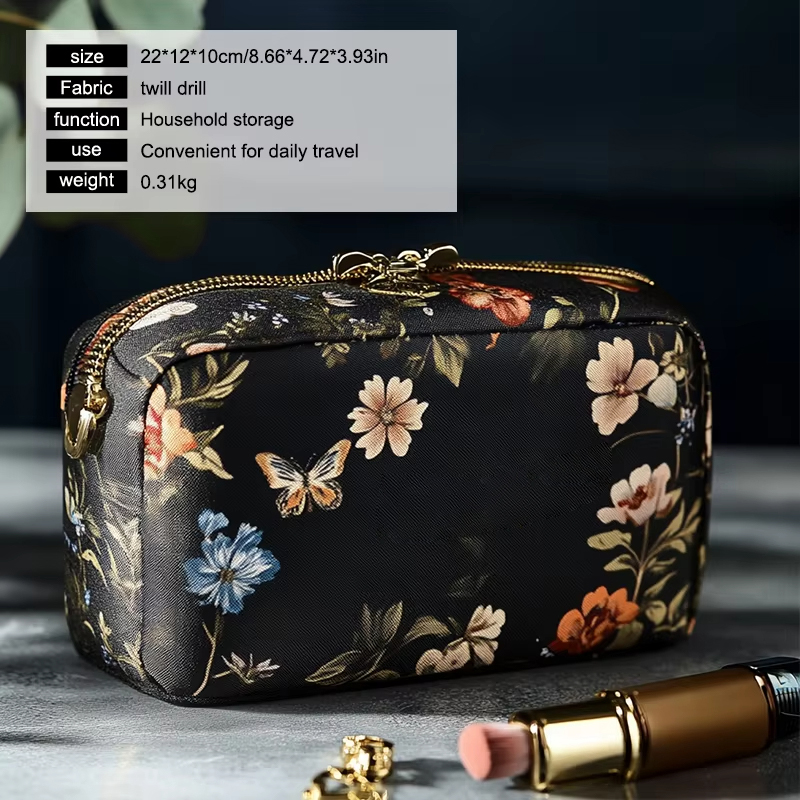
What Morning Routine Really Means For Small Canvas Makeup Bag Size Choice
Morning routine is not the same for everyone. Some people follow a very short routine with only a few items, while others go through several steps involving skincare layers and makeup tools.
This difference changes how a Small Canvas Makeup Bag is used in real life.
In practice, morning routines can usually be grouped into two patterns:
- Simple routine
A few essential items used quickly before leaving
- Layered routine
Multiple steps with different products and tools
The number of steps directly affects how much space is needed. A small bag may feel enough for a simple routine, but may become limited when more steps are added.
In daily use, people often do not plan this in advance. Instead, they adjust the bag size after noticing how crowded or empty the space feels during repeated mornings.
How Small Canvas Makeup Bag Size Affects Real Morning Access Speed
One of the most practical differences between sizes is how quickly items can be found and used during the morning rush.
In real situations, speed is more important than perfect arrangement. The bag size influences this in a direct way.
- Smaller size
Items are tightly packed, which reduces search area but can make reaching deeper items slower
- Medium size
Items are grouped with some spacing, allowing easier visibility and access
- Larger flexible size
Items are more spread out, but may require more internal scanning
A simple comparison of morning access behavior:
| Size Type | Morning Behavior | Access Speed Feeling |
|---|---|---|
| Small size | Tight packing, fewer items | Fast but limited space |
| Medium size | Balanced grouping | Stable and easy reach |
| Larger size | Spread arrangement | Flexible but requires scanning |
In real morning use, people usually notice this difference when they are in a hurry. If items are found quickly without thinking, the size feels suitable for the routine.
What Items Are Actually Packed For Morning Use In Daily Life
Morning storage is not about carrying everything. It is about selecting items that are repeatedly used within a short time window before leaving home.
A Small Canvas Makeup Bag typically holds a mix of items such as:
- Skincare products used right after waking up
- Light makeup tools for quick adjustment
- Basic personal care items such as lip or hand care
- Small accessories used during preparation
- Occasionally added items for work or travel days
What matters is not the category, but how often the item appears in the morning process.
Over time, users naturally reduce or expand what they carry based on what they actually use. Items that are not used often slowly disappear from the morning set.
How Compact Size Small Canvas Makeup Bag Works In Minimal Morning Routine
A compact size is often used by people who follow a simple morning pattern. The routine is short, and only essential items are involved.
In this situation, the Small Canvas Makeup Bag behaves like a quick access container rather than a full organizer.
Typical behavior includes:
- Items placed directly without sorting
- Fast opening and closing during preparation
- No need for internal separation
- Immediate visibility of all contents
The advantage of this size is simplicity. Everything is close together, so there is no time spent searching.
However, in real use, there is also a limitation. When extra items are added unexpectedly, space becomes tight and arrangement becomes less stable.
How Medium Size Small Canvas Makeup Bag Supports Balanced Morning Routine
Medium size is often chosen when morning routines include more than just basic steps. It allows a balance between space and control.
In daily use, this size tends to support:
- Separation between skincare and makeup items
- Grouping of similar tools together
- Easier movement of items inside the bag
- Less pressure when adding new products
Unlike compact size, medium space allows users to keep items in a more structured way without forcing strict arrangement.
A common behavior pattern is:
- Skincare items placed in one section
- Makeup tools placed in another area
- Frequently used items kept near the opening
- Less used items placed deeper inside
This creates a natural flow during morning preparation, where each step connects to a specific group of items.
How Larger Size Works When Morning Routine Becomes More Complex
In real life, morning routines are not always simple. Some days involve only basic skincare, but other days include extra steps like sunscreen, light makeup, hair care, or quick touch-ups before going out. When these steps increase, storage needs also change.
A larger Small Canvas Makeup Bag does not change how people do their routine, but it changes how smoothly items can be handled during those steps.
In practical use, larger size usually shows these behaviors:
- Items are placed without tight stacking
- Different product types stay separated naturally
- Hands can reach inside without shifting everything
- New items can be added without removing others
This kind of space works better when morning preparation is not fixed. For example, on days when users are in a hurry, they may throw items in quickly. On slower mornings, they may arrange them more carefully. Larger space supports both situations without forcing a single pattern.
What Actually Happens During Rushed Morning Packing
Morning rush is where storage behavior becomes very obvious. People are not thinking about organization rules at that moment. They are just trying to finish preparation quickly.
In this situation, size differences become more noticeable.
- Small size
Items are close together, so nothing moves much, but deeper items can take longer to reach if packing was not careful
- Medium size
Items naturally sit in small groups, making it easier to grab what is needed without disturbing everything
- Larger size
Items are easier to place quickly, but if not grouped, they may spread out and require a quick visual scan
A simple comparison of real morning behavior:
| Situation | Small Size Behavior | Medium Size Behavior | Larger Size Behavior |
|---|---|---|---|
| Rush packing | Tight placement | Natural grouping | Fast loose placement |
| Item search | Direct but compact | Balanced visibility | Needs quick scan |
| Repacking | Slow adjustment | Easy adjustment | Flexible adjustment |
In real use, users usually notice size limits only during rushed moments, not during calm preparation.
How Material Supports Fast Morning Handling Without Thinking
Canvas material plays a quiet role in daily morning behavior. It is not something users actively notice, but it affects how the bag reacts during quick movement.
In real morning use, canvas allows:
- Fast opening without resistance
- Flexible shaping when items are added quickly
- Easy closing even when packing is not neat
- Soft adjustment when placed inside larger bags
This is important because morning routines are often repetitive and slightly rushed. People do not always place items carefully. Sometimes they just drop them in and close the bag.
Canvas structure supports this natural behavior instead of requiring precise arrangement.
What Happens When Size Does Not Match Morning Habit
In daily life, problems usually appear when the bag size does not match real routine habits. This is not about product quality, but about mismatch between behavior and space.
Common real situations include:
- Small bag feels crowded when more items are added over time
- Large bag feels empty, causing items to move around during use
- Medium bag becomes overloaded when routine expands suddenly
- Items become harder to find when placement is inconsistent
These situations are usually noticed during busy mornings, not during planning.
A practical breakdown:
- Overfilled small space
Items stack on top of each other, making access slower
- Underused large space
Items spread out, requiring more searching time
- Unbalanced medium space
Works well until routine changes slightly
Over time, users naturally adjust by changing what they carry rather than forcing strict organization.
How Morning Routine Changes Slowly Affect Bag Choice
Morning routines do not stay the same forever. They shift gradually based on lifestyle, work schedule, or even weather habits.
In real life, these changes are small but continuous:
- Adding sunscreen or skincare steps
- Reducing makeup steps for faster mornings
- Switching between home routine and travel routine
- Changing preparation speed depending on daily schedule
As these changes happen, users often do not immediately change the bag. Instead, they adjust how they use it:
- Carry fewer items on busy days
- Add extra items only when needed
- Rearrange placement based on habit
- Leave unused space without planning
Size choice becomes clearer only after repeated daily use, not at the beginning.
How Internal Organization Forms Without Planning
One interesting behavior in daily use is that organization patterns form naturally.
Over time, patterns appear:
- Frequently used items always stay near the opening area
- Rarely used items slowly move to deeper corners
- Similar items start to stay together automatically
- Empty space becomes reserved for temporary items
This is not a designed system. It is a result of repeated morning behavior.
The bag becomes part of memory. Users begin to reach for items without thinking, because placement becomes familiar through repetition.
In real daily life, the best size is not about fixed rules. It is about how smoothly the morning routine feels when repeated every day.
- Small size supports simple and quick routines with fewer items
- Medium size supports balanced routines with steady steps
- Larger size supports flexible routines with changing needs







Copyright © Zhejiang Yisen Bags Co., Ltd. All Rights
Reserved
OEM/ODM Bag Manufacturer
